Popular Items in Camping Coolers


Camping Coolers


How to Choose a Camping Cooler! Tips and Precautions

When enjoying camping and the outdoors, a camping cooler is essential for keeping food and drinks safe.
In this article, we’ll explain how to choose a cooler you can use with confidence and share tips on how to make the most of it. We’ll also provide detailed information on maintenance methods and examples of how to use it throughout the seasons.
We’ve compiled this guide as thoroughly as possible so you can resolve all your basic questions in one go. Please read to the end and use this as a reference.
What Is a Camping (Outdoor) Cooler?

A cooler used for camping and outdoor activities is an item designed to keep food and drinks at the appropriate temperature. While it’s essential for summer camping, it actually plays a role in preventing food from freezing during winter outdoor activities as well, making it useful all year round.
People often choose a cooler based solely on the idea that “as long as it keeps things cold, that’s good enough,” but your comfort level can vary greatly depending on the number of people using it and the specific situation.
Types and Features of Camping (Outdoor) Coolers
Pros and Cons of Hard-Side Coolers

Hard-sided coolers are characterized by their sturdy construction and excellent insulation. They often use thick insulation material, and some models from certain manufacturers can keep ice from melting for several days.
Thanks to their high durability, you can use them with confidence even on long camping trips or during extreme heat. However, the units are heavy, and you’ll need to set aside a fair amount of space for storage.
Pros and Cons of Soft-Sided Coolers

Soft-sided coolers are lightweight and easy to handle, and since many models are foldable, they are easy to store in a car or at home. For day trips or small-group outings, their portability is a major advantage.
However, since few models feature thick insulation, their cooling performance may be slightly inferior in high temperatures. Caution is advised for camping trips involving large groups or extended stays, as the cooling capacity may prove insufficient.
How to Choose a Cooler for Camping (Outdoor Use)

Selecting the Right Capacity for the Number of People and Duration
When choosing a cooler, first consider the number of people going on the trip and the length of your stay.
For family camping, a capacity of 30L or more provides peace of mind, while for solo or duo camping, 15–25L is usually sufficient.
The required size varies depending on the type and quantity of food you bring, so it’s important to consider this along with the number of nights you’ll be staying.
Prioritizing Cooling Power vs. Lightweight and Portability
For summer camping or multi-day outdoor trips, cooling performance is the most important factor. Some models featuring vacuum-insulated panels can keep ice for several days, so if you’re camping with a large group in the summer, we recommend considering a hard-sided cooler with high cooling performance.
On the other hand, lightweight and versatile soft-sided coolers are convenient for short outdoor trips or events like sports days. Clearly defining your priorities based on your specific use case will help you avoid making the wrong choice.
Key Points for Functionality and Usability
Features such as the presence of casters or handles, the location of the drain plug, and the lid opening mechanism directly impact ease of use. In particular, a drain plug located at the bottom allows you to easily drain water that has accumulated inside the cooler, making cleanup easier after use or when the ice has melted.
If storage is a priority, choosing a foldable soft-sided cooler makes storage after returning home a breeze. If you’re focused on design, models with stylish colors or prominent brand logos are also popular.
Choosing by Price Range and Value for Money
In the high-end price range, models like YETI offer unmatched cooling performance and exceptional durability. If you’re looking for a high-performance cooler with the intention of using it for a long time, these are definitely worth considering.
On the other hand, for those on a budget, we recommend easy-to-use models from home improvement store brands that are available at affordable price points. If you’re looking for value for money, it’s important to compare both performance and price to find a cooler that meets your needs.
Seasonal Usage and Precautions for Camping (Outdoor) Coolers

In the summer, prioritize cooling power. It’s effective to pack in extra ice or ice packs, or use a stand to block heat from the ground and lower the internal temperature.
For winter camping, to prevent food from freezing, even with hard-sided coolers, it’s recommended to position them carefully so they don’t come into direct contact with cold air or the freezing ground.
In spring and fall, when there can be significant temperature fluctuations, comfort is enhanced by choosing the right type for the situation—using a hard-sided cooler for food you want to keep cold and a soft-sided cooler for lighter beverages.
Maintenance and Storage Methods for Camping (Outdoor) Coolers

Proper maintenance and storage are crucial for extending the life of your cooler. After use, immediately wash the interior with a neutral detergent, then deodorize and disinfect it with an alcohol spray before thoroughly drying it with a towel.
Leftover moisture can cause mold and bacteria growth, as well as unpleasant odors. To dry it completely, we recommend leaving the lid open and air-drying it in a well-ventilated, shaded area.
For long-term storage, place the cooler indoors out of direct sunlight with the lid slightly open to ensure proper ventilation; adding a deodorizer will make this even more effective.
Common Mistakes and Troubleshooting for Camping (Outdoor) Coolers
When using a camping cooler, a common mistake is that the ice melts and the food gets soaked.
It is effective to either use separate coolers for drinks and food, or to place food in zip-top bags or airtight containers to prevent it from getting wet.
Also, failing to clean the cooler after use can lead to odors and mold, so be sure to wash it thoroughly and let it dry completely before storing it.
Choosing the wrong size can lead to not being able to fit all your food and drinks, causing a panic once you arrive at your destination, so it’s best to make a list of what you need beforehand to ensure a smooth experience.
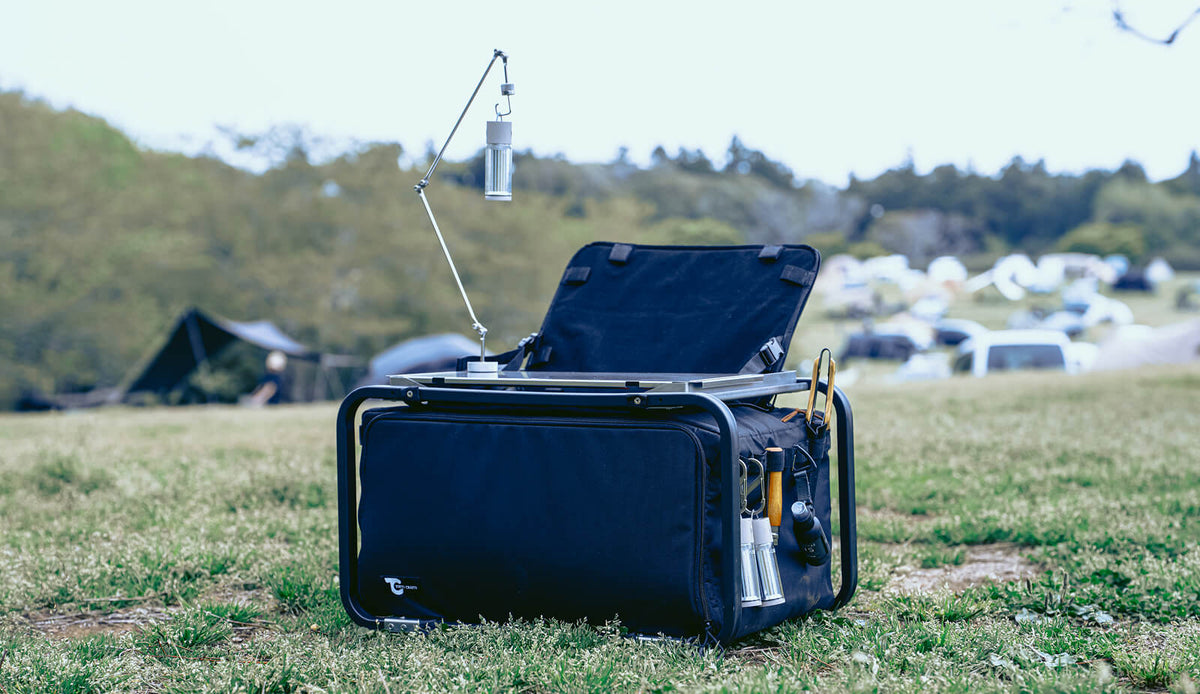
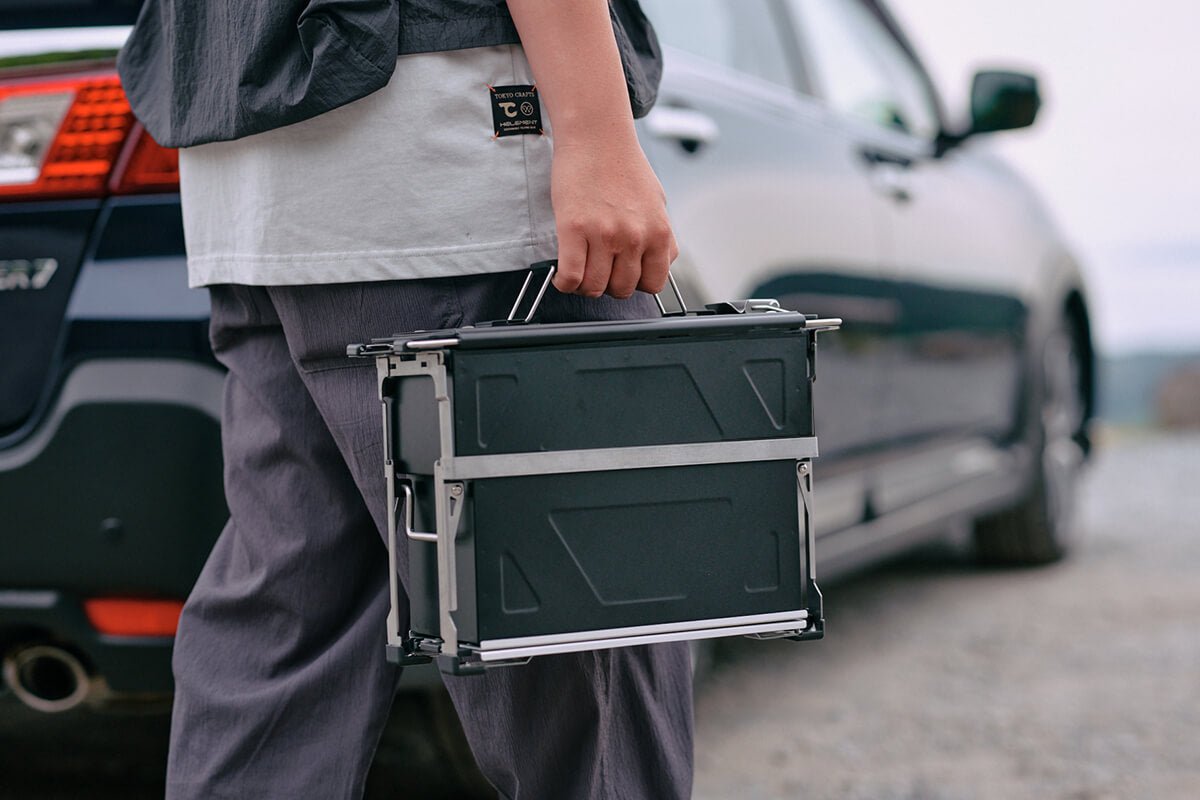
For camping (outdoor) coolers, we recommend TOKYO CRAFTS Nimitt Seller 32”

TOKYO CRAFTS Nimitt Seller 32” is an innovative product that defies conventional wisdom about coolers.
Its standout feature is the 2-way opening mechanism that supports both top-opening and side-opening. The side-opening style, which allows it to be used like a refrigerator, makes loading and unloading food and drinks incredibly smooth—and the fact that it can be opened and closed even when items are placed on top is groundbreaking.
Furthermore, the panel structure, which makes extensive use of flat surfaces, achieves a sleek, streamlined form and excellent storage efficiency. The interior features a flat, non-sloped design that maximizes capacity, and adjustable dividers allow for organization just like in a refrigerator.
With its perfect 32L capacity, it can store 2L PET bottles in any orientation. It offers the same comfortable user experience as your home kitchen, even when you’re outdoors.
This is the perfect choice for anyone who refuses to compromise on appearance, functionality, or ease of use.
Make camping and outdoor activities more comfortable with a cooler

A camping cooler is a reliable all-season outdoor gear item that serves not only as a cooling solution in summer but also as a frost protection tool in winter.
It’s important to carefully balance factors such as the number of people, duration of the trip, cooling capacity, portability, and price range to choose the model that’s perfect for you.
By performing regular maintenance and proper storage, you can keep your cooler clean and in good condition for a long time. Find the cooler that suits your style by adjusting your approach—such as choosing between hard-sided and soft-sided models or adjusting the capacity—depending on the season and how you plan to use it.
RANKING
ランキング一覧へ