Is an Inner Tent Necessary? Explaining Its Role, Benefits, and How to Choose One
A tent isn’t just the outer shell that protects you from rain and sunlight; by using an “inner tent” to create a double-layered structure, you can create an even more comfortable space.
Some inner tents are sold as a set with a flysheet, while others are not, so many people may be unsure which one to choose.
In this article, we’ll explain the role, benefits, and selection criteria of inner tents in detail.
- I couldn’t sleep because it was so cold…
- There was terrible condensation inside the tent...
- I woke up covered in mosquito bites...
If you’re struggling with any of these issues, please use this article as a guide.
What is an inner tent?
An inner tent is, as the name suggests, the "inner tent" used inside the flysheet that protects against rain, wind, and sunlight. In most cases, it is used as a sleeping area.
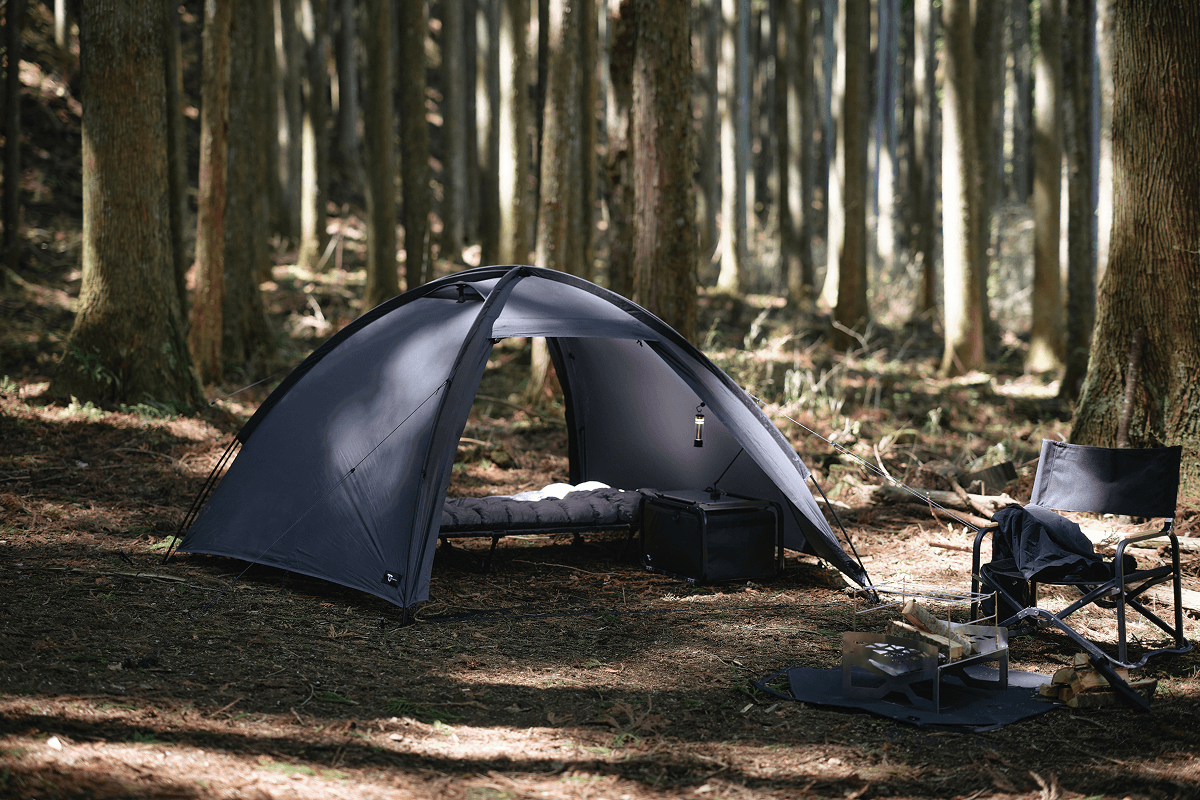
Tents are divided into "double-wall tents," which are set up by layering two layers, and "single-wall tents," which can be set up with just the main tent.
Since double-wall tents require both an outer flysheet and an inner tent for setup, they are typically sold as a set.
In contrast, single-wall tents, which can be set up with just the main tent, do not strictly require an inner tent. However, adding an inner tent to a single-wall tent can create a more comfortable living space.
This is especially true for one-person tents, where interior space is limited; using an inner tent makes it easier to separate sleeping areas and provides noticeable benefits in preventing condensation and keeping out the cold.
With single-wall tents, depending on the product, the inner tent may come standard with the main tent, or it may be an optional extra (sold separately).
Inner tents are also sold separately.
The Role of an Inner Tent
The main role of an inner tent is to
- Insect protection
- Preventing condensation
- Insulation
.
Insect protection
Summer camping is often plagued by insects. Many people wake up in the morning to find themselves bitten by mosquitoes in several places. Annoying insects like mosquitoes enter through gaps in the door panels or the bottom of the tent.
In contrast, inner tents feature walls and floors that are integrated into a single unit. When the door panels are fully closed, they create an airtight space that blocks insects from entering. Additionally, most inner tents allow you to switch the door panels to mesh material, ensuring good ventilation.
Preventing Condensation
Especially during cold weather, the temperature inside the tent is higher than the outside air. This temperature difference causes condensation to form on the inside of the tent, and in severe cases, your sleeping bag, clothes, and gear can get wet.
Using an inner tent to create a double-layered structure adds an extra layer of air. This helps moderate the temperature difference between the outside air and the inside of the tent, reducing condensation.
Insulation
While a spacious tent is comfortable, it can be difficult to warm up the entire tent during cold weather, and it can feel very cold, especially while sleeping. Using an inner tent creates a smaller space, making it easier to warm up with body heat and breath, thereby reducing the cold.
Additionally, when the door panels of an inner tent are fully closed, it creates an airtight environment. This allows it to retain warm air better than a flysheet that isn’t integrated with the floor.
Benefits of Using an Inner Tent
In addition to its many functions, the inner tent offers the following three benefits:
- Easy Setup
- Allows for tarp camping
- More affordable than a main tent
We’ll explain each of these benefits in detail.
Benefit 1: Relatively easy setup
There are two types of inner tent setup methods: "suspension-style" and "sleeve-style."
With the hanging style, you set up the inner tent by connecting it to the main tent after the main tent is already up. In contrast, the sleeve style involves inserting two poles into the inner tent itself to set it up.
Both methods allow for quick and easy setup.
Benefit 2: Allows for tarp camping
Among inner tents, the hanging style is a "non-freestanding tent" that cannot stand on its own. In contrast, the sleeve-style inner tent can stand on its own.
The sleeve-style can be set up not only inside a tent but also under a tarp. During good weather, you can enjoy tarp camping, which offers a sense of openness.
Advantage 3: More Affordable Than Main Tents
In addition to inner tents sold as a set with a flysheet, there are products sold as "options (sold separately)" or as "inner tents only."
Since they are used in conjunction with a main tent that provides protection from rain, wind, and sunlight, waterproofing, water repellency, and UV protection are not essential. Consequently, they are more affordable than main tents, making them an accessible option.
Key Points for Choosing an Inner Tent
When purchasing an inner tent, keeping the following four points in mind will help you choose a product that creates a comfortable space.
- Is there a genuine inner tent available?
- Is it a "hanging type" or a "sleeve type"?
- Choose a material that suits your camping style
- Choose a size that fits your main tent
Point 1: First, check if a genuine inner tent is available
With the hanging style, if you choose a non-genuine inner tent, the attachment points may not align properly with the main tent. If you choose the hanging style, be sure to check if a genuine inner tent is available.
Sleeve-style inner tents stand on their own, so they can be used with a variety of tents. There’s no need to insist on a genuine product.
Point 2: "Suspended" or "Sleeve"
As mentioned earlier, inner tents can be set up using either a hanging-style or sleeve-style method. Let’s take another look at the characteristics of each in detail.
-Features of the Hanging Type
The hanging style is an inner tent designed for “single-wall tents” that are set up using a single outer tent.
Since you simply connect the inner tent to the main tent after setting up the main tent and hang it from there, setup is quick and easy.
You can use it flexibly—for example, by leaving the inner tent unpitched during the day to maximize living space, and attaching it only at night for sleeping.
Please note that it will not set up properly unless you use a genuine inner tent that matches the connection points or a compatible inner tent.
-Features of the Sleeve Type
The sleeve-style system is set up by inserting two poles into the main body in a cross pattern. Since it is a freestanding design, it can be used in combination with a variety of tents, not limited to genuine products.
By using it with single-pole tents, tunnel tents, or shelter tents, you can enjoy "kangaroo-style" camping.
Since it stands on its own, some products are sold as standalone inner tents.
Point 3: Check the Characteristics of Each Material
Inner tents are made from a variety of materials. Since each material has its own advantages, disadvantages, and characteristics, choose the one that best suits your camping style.
- "Mesh" offers excellent breathability and is recommended for summer
For summer camping, we recommend inner tents made of "mesh material" for its exceptional breathability. However, since they cannot be fully closed, they are not suitable for camping in cold weather.
- "Polyester" is durable, lightweight, and ideal for beginners
Inner tents made of polyester are quick-drying, so they dry easily even if condensation forms, and they are lightweight and easy to handle. Another plus is that they are relatively affordable.
- "Cotton" is highly effective at preventing condensation
Cotton inner tents have a pleasant texture and a natural feel. Their advantages include good breathability and resistance to condensation.
However, the downsides are that it is slightly more expensive than other materials and is heavier.
- "Nylon" is recommended for mountaineering
Nylon is lightweight and highly durable. It is well-suited for camping while hiking, where conditions are often harsh and you want to keep your load light. Prices tend to be relatively high.
Point 4: Choose a size that matches your main tent
If you’re buying a genuine brand set, the size will naturally match your main tent perfectly.
However, if you’re purchasing a standalone inner tent, you’ll need to verify that the size matches your main tent. Choose an inner tent that provides the balance of living and sleeping space you prefer.
TOKYO CRAFTS Tent Lineup
TOKYO CRAFTS offers a wide range of comfortable tents that can be used in combination with inner tents.
"Wing Fort" with Standard Inner Tent
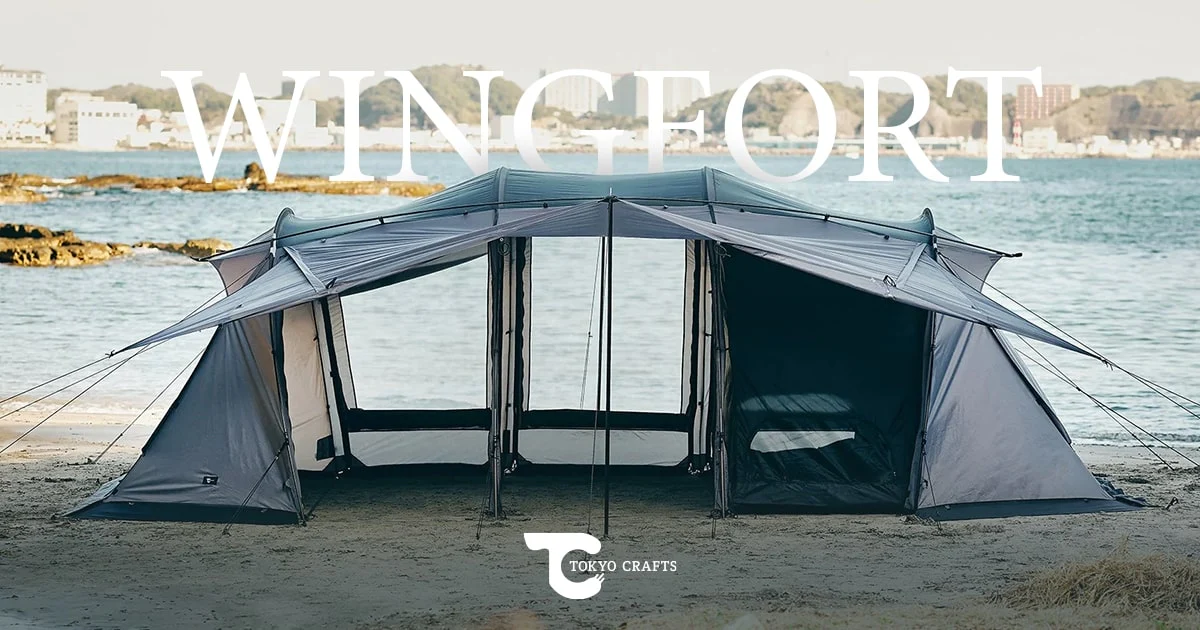
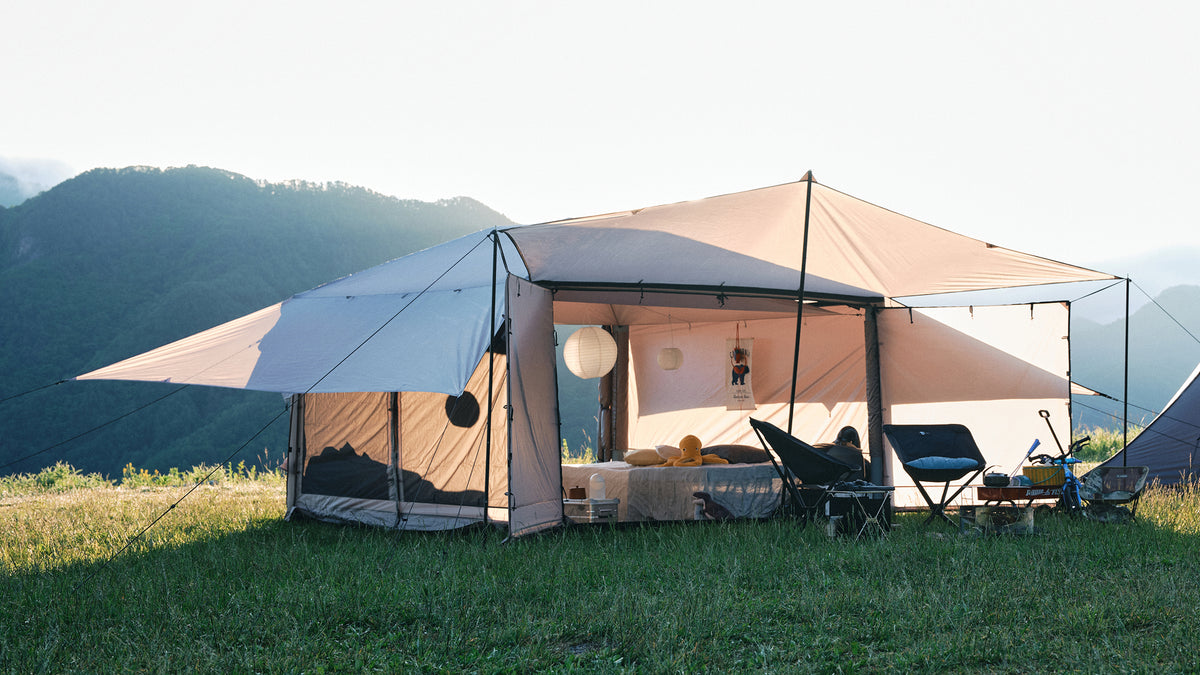
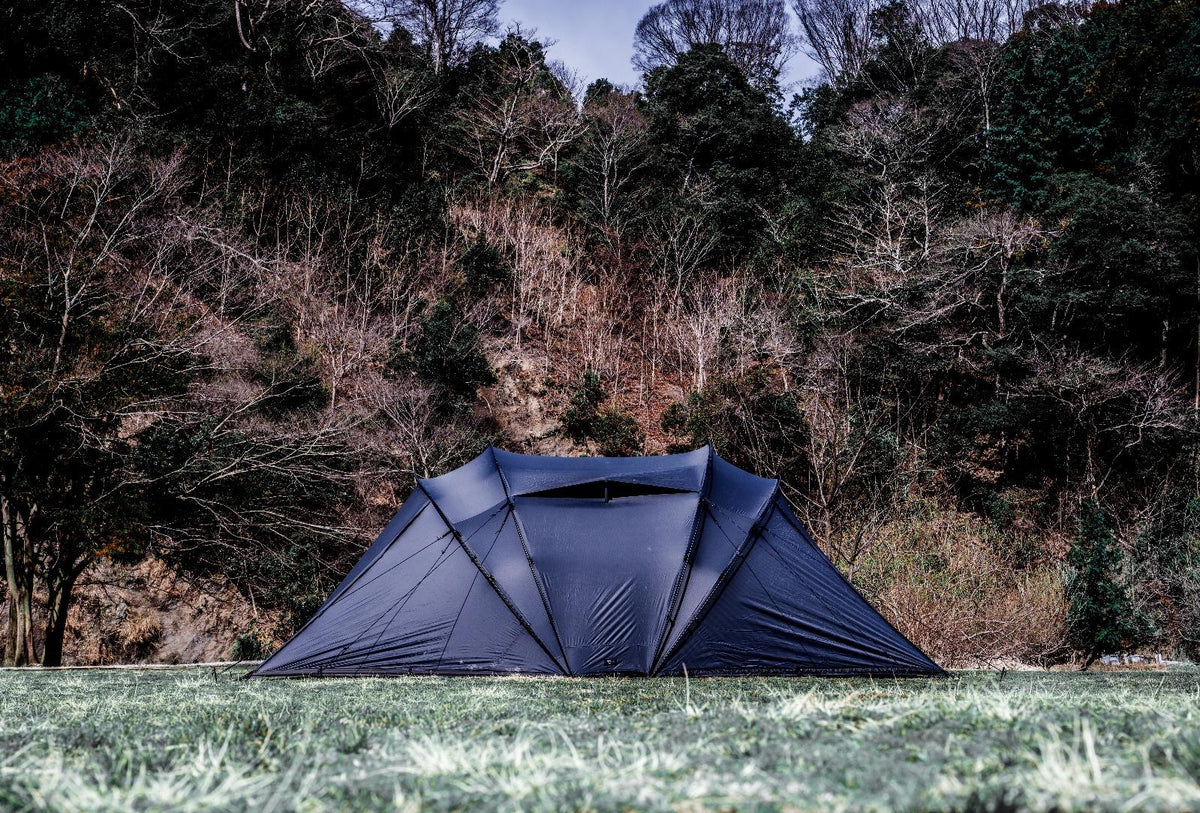
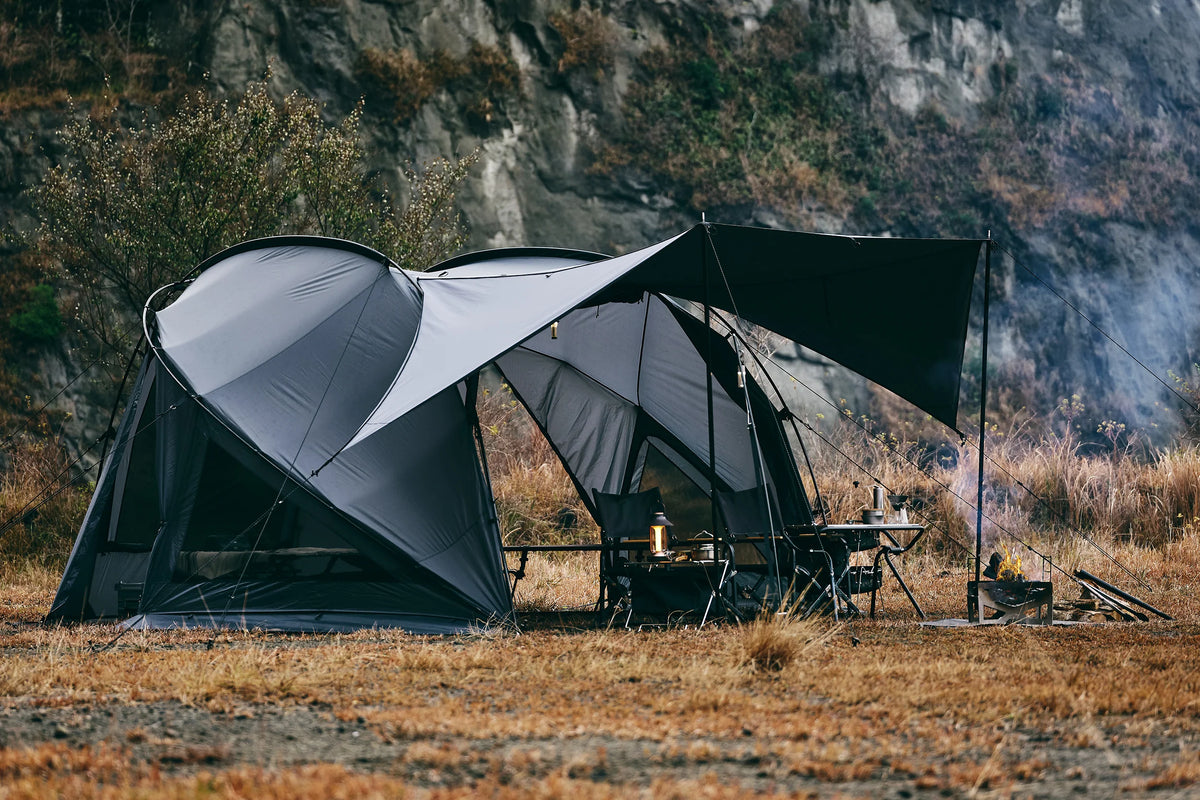
The "Wing Fort" is recommended for family and group camping. It combines the best features of tunnel tents and shelter tents.
Typically, tunnel tents and shelter tents are “single-wall tents” set up with a single layer of fabric. The Wing Fort features a two-layer structure with an outer panel that protects the tent from rain and sunlight.
The outer panel can be flipped up to serve as a canopy. Furthermore, you can fully close the tent while keeping the canopy raised, ensuring you stay dry even during sudden storms.
The inner tent, which comfortably accommodates four people, is a welcome standard feature.
"Tenbi Shelter" comes with an inner tent when purchased as a set
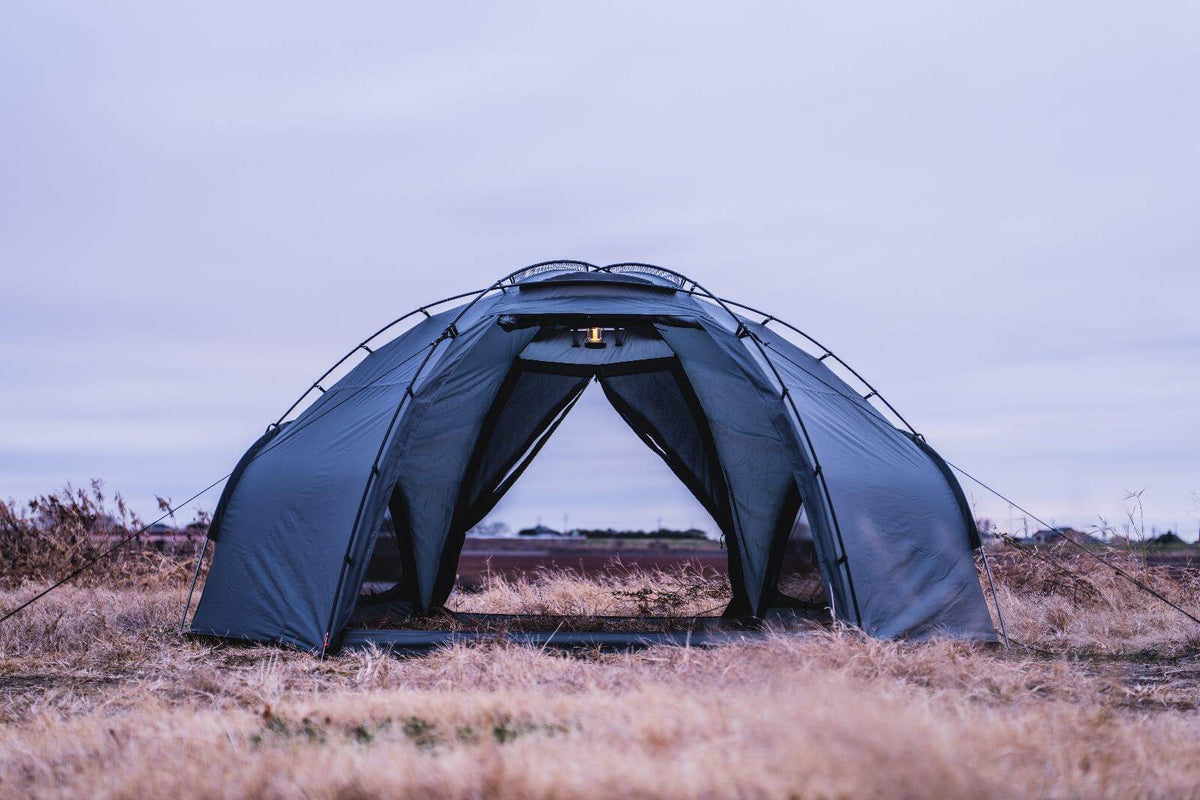
The "Tenbi P-Shelter" is a new style of tent that combines the best features of dome and tunnel tents.
It is set up by crossing a third pole over two parallel poles. This design achieves both the livability of a tunnel tent and the ease of setup of a dome tent.
The optional (sold separately) inner tent is large enough for four people to sleep comfortably. Enjoy lively family gatherings or a relaxing getaway for two. We also recommend the value-packed set.
"Diafort TC Solo Tent" with Genuine Inner Tent
The "Diafort TC Solo Tent" is recommended for solo camping and features a beautiful, elegant appearance.
By adding a third pole to a single-pole tent—which is known for its ease of setup and high ceiling—it eliminates the sense of confinement near the ceiling, a common drawback of single-pole tents.
The optional inner tent features mesh on all four sides, allowing you to stay cool in the summer without worrying about bugs.
"Montope" (Inner Tent Included with Set Purchase)
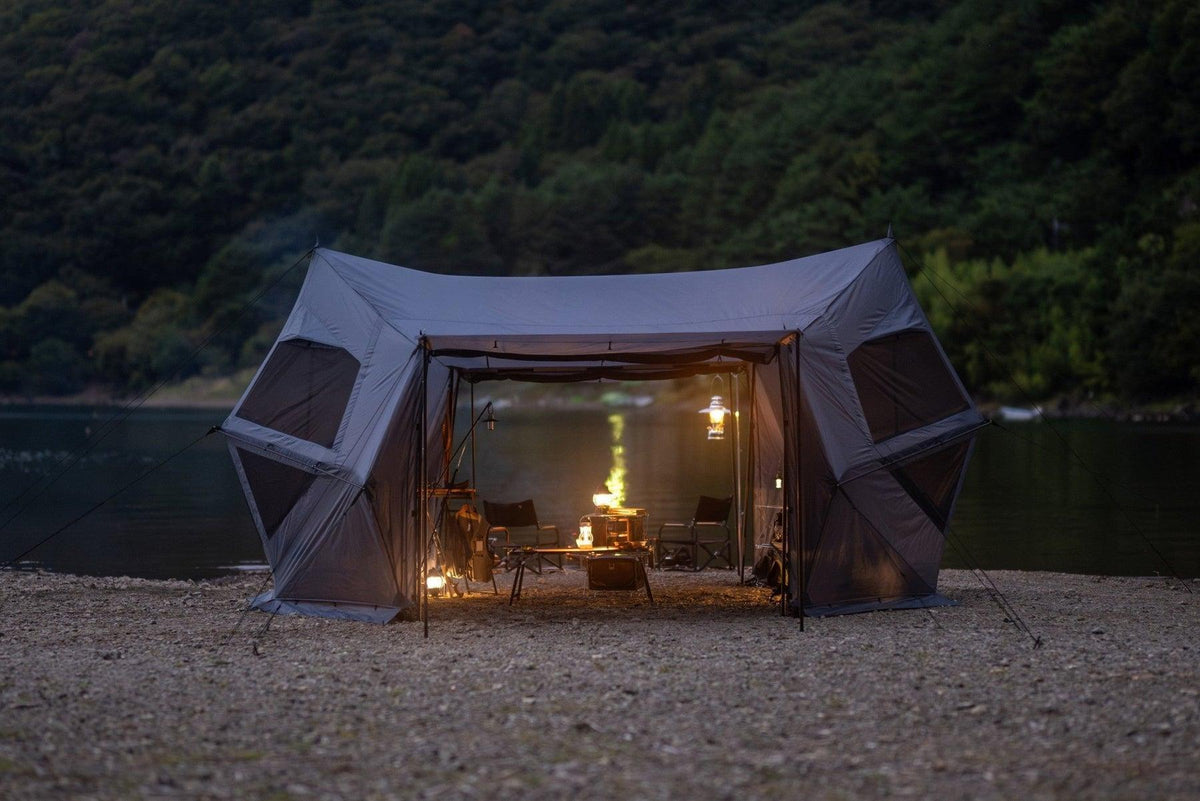
The "Montope" duo tent features a box-shaped design that creates an open and airy living space.
With mesh panels on three sides and a skylight, it ensures plenty of natural light and allows for stargazing at night. It’s a tent that lets you feel close to nature while staying inside.
The optional inner tent is spacious enough to fit two cots. We also recommend the value-packed set.
The difference in comfort with and without an inner tent is night and day!
Inner tents serve many purposes, including protection against insects, cold, and condensation. Adding one to your main tent makes camping even more comfortable.
Inner tents come in various shapes and materials, so choose the one that best suits your camping style.
Be sure to choose an inner tent that fits your main tent perfectly to create an even more comfortable camping space.
RANKING
ランキング一覧へ