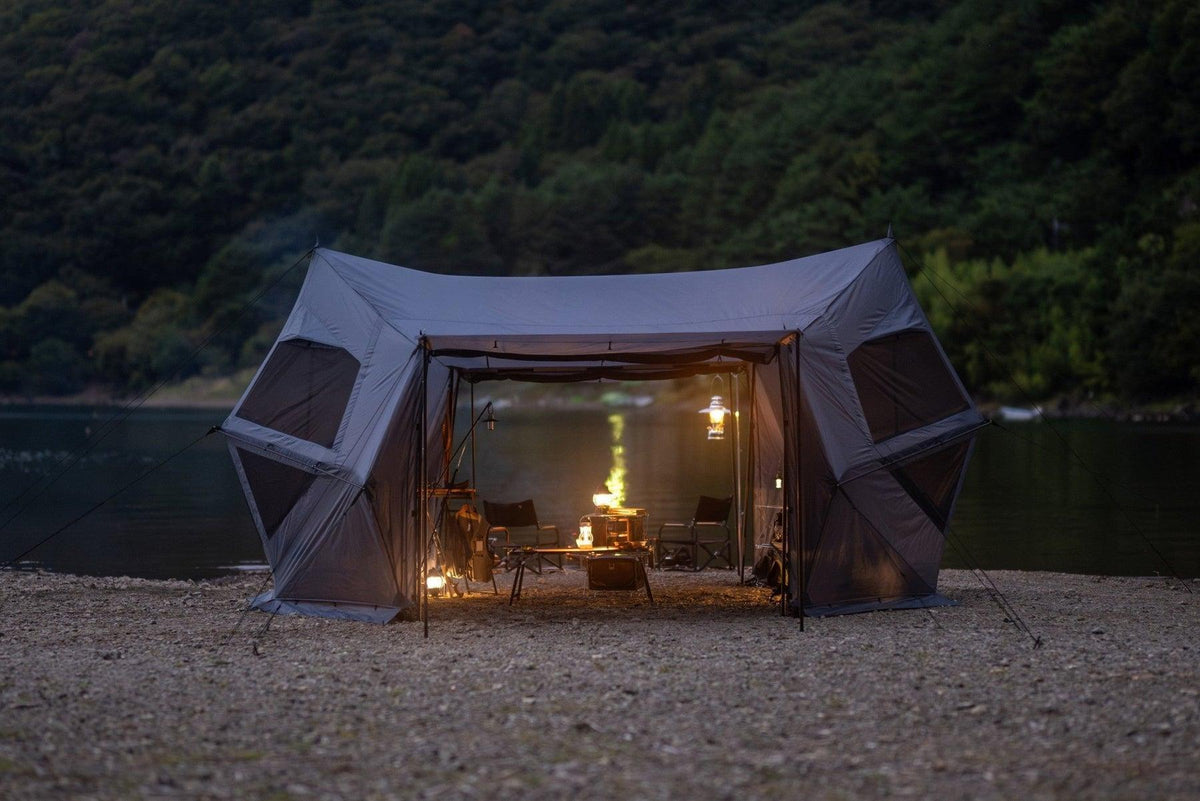
[How to Choose a Single-Pole Tent] Pros, Cons, and Recommended Tents
With their cute pointed roofs, single-pole tents are popular among women and children. They’re easy to set up and really stand out at campsites.
With so many brands offering a wide variety of single-pole tents, many people may find it difficult to decide which one to choose.
That’s why, in this article, we’ll provide a detailed guide on how to choose a single-pole tent, along with its pros and cons. We’ve also highlighted some of TOKYO CRAFTS’ recommended tents.
If you want to enjoy stylish and comfortable camping with a single-pole tent, be sure to check this out.
What Is a Single-Pole Tent?
A “single-pole tent” is a tent set up using a single center pole. Its pointed roof design makes it stand out at campsites.
Single-pole tents can be further divided into “teepee-style” and “bell-style” types.
Conical models are classified as “teepee-style.” A great advantage is that many products are reasonably priced due to their simple structure. However, a drawback is that the roof slopes all the way to the ground, creating a lot of dead space.
Tents with walls rising from the roof are classified as "bell-shaped." Because the walls rise up, they allow for more efficient use of space. Prices tend to be higher than those of "teepee-style" tents.
Advantages
Single-pole tents are not only stylish but also highly appealing because they are easy to set up.
First, lift the tent body using the center pole and secure it by staking it down. Next, stake down the sides of the tent, and setup is complete. Unless the tent is exceptionally large, one person can set it up alone.
Thanks to a structure that allows wind to pass through easily, they are more wind-resistant than they appear, which is a definite advantage.
Many models feature a center pole exceeding 2 meters in height, so even tall men won’t bump their heads in the center, creating a sense of openness.
Disadvantages
One-pole tents have a sloped roof, so the interior feels more confined toward the outer edges—this is a drawback. In particular, “teepee-style” tents have no vertical walls, resulting in a lot of dead space.
Tips for Choosing a Single-Pole Tent
To choose a single-pole tent that’s easy to use, keep the following five points in mind.
- Number of Users
- Material Properties
- Ceiling Height
- Water Resistance and Breathability
- Waterproofing
Tip #1: For maximum comfort, choose a tent that accommodates one more person than your group size
Many tents specify a "recommended capacity," which can serve as a guide when choosing a size. However, this capacity is sometimes set to the bare minimum number of people who can sleep inside.
If you want to have plenty of space, it’s best to choose a tent with a capacity that’s one person larger than the actual number of people using it.
Tip 2: Understand the Material Properties
Tents are made from a variety of materials depending on the product. The following three types of materials are primarily used in single-pole tents.
- Polyester
- Cotton
- Poly-cotton
Each material has its own pros and cons, so choose the one that best suits your camping style.
—Polyester
Polyester is a lightweight material that’s highly portable. It also dries quickly, requiring little maintenance or time. Many affordable products are available, making it the most commonly used material for tents.
However, its poor breathability and tendency to develop condensation are drawbacks. Furthermore, because it has low flame resistance, it is prone to developing holes from sparks, so caution is required when handling fire, such as around a campfire.
- Cotton
"Cotton" is a material with a natural texture that creates a stylish atmosphere. It is highly breathable, so you can stay cool even during summer camping. Additionally, since the fabric traps a lot of air, it keeps you warm even in winter.
Furthermore, it absorbs excess moisture, making it less prone to condensation. It has high flame resistance and is unlikely to catch fire even if sparks land on it, so you can enjoy campfires with peace of mind.
However, its weight is a drawback, and it tends to be on the pricier side.
-Poly-Cotton Fabric
"Poly-cotton" is a blend of polyester and cotton. Also known as "TC fabric," it combines the best of both materials.
Its appeal lies in its natural texture, similar to cotton. It offers better breathability and moisture absorption than polyester, making it cool in summer and relatively warm in winter. Additionally, it is less prone to condensation than polyester and has high flame resistance, which are further advantages.
It is lighter than cotton and highly portable, but it is more expensive than polyester and more affordable than cotton.
Tip 3: Ceiling Height Matters
Since single-pole tents have a sloped roof, a low ceiling height can make the space feel cramped. Therefore, even for small groups, it is recommended to choose a model with a reasonably high ceiling.
With a ceiling height of 2 meters or more, even tall men can change clothes in the center of the tent without having to bend over.
Tip 4: Check Water Resistance and Breathability
To ensure a comfortable stay in your tent, be sure to check the water resistance and breathability.
"Water resistance" is a numerical value indicating how resistant the fabric is to water penetration, measured in "mm." For "polyester" materials, a water resistance rating of around 1,500–2,000 mm means water won’t seep in even during heavy rain, unless it lasts for an exceptionally long time.
"Cotton" and "poly-cotton" fabrics use a different system to prevent water from seeping in compared to "polyester." These fabrics absorb a certain amount of water, which fills the gaps in the fabric and prevents further seepage. Therefore, even with a water resistance rating of around 350 mm, they can effectively prevent water from seeping in.
If a tent’s water resistance is too high, it can reduce breathability, making the interior feel stuffy. If you camp in the summer, choose a tent that balances water resistance with breathability.
Tip 5: Water-repellent treatment provides peace of mind even during sudden rain
A tent with a reliable waterproof coating can prevent water from seeping in even during prolonged, heavy rain.
First, it’s best to choose a tent that has waterproof tape applied to the underside of the seams, which are the most prone to leaks.
You should also check whether the fabric surface has a “waterproof coating” or a “water-repellent coating” that causes water to bead up and prevents it from soaking in.
However, waterproof tape and waterproof/water-repellent treatments can peel off or lose their effectiveness over years of use.
If you notice the waterproofing or water-repellent effects diminishing, it’s a good idea to reapply the waterproof tape or spray the tent with a waterproofing or water-repellent spray.
TOKYO CRAFTS Recommended Tents
Here, we’ll introduce TOKYO CRAFTS’ recommended tents. We’ve selected a variety of tent types, including single-pole tents.
Diafort TC Solo Tent
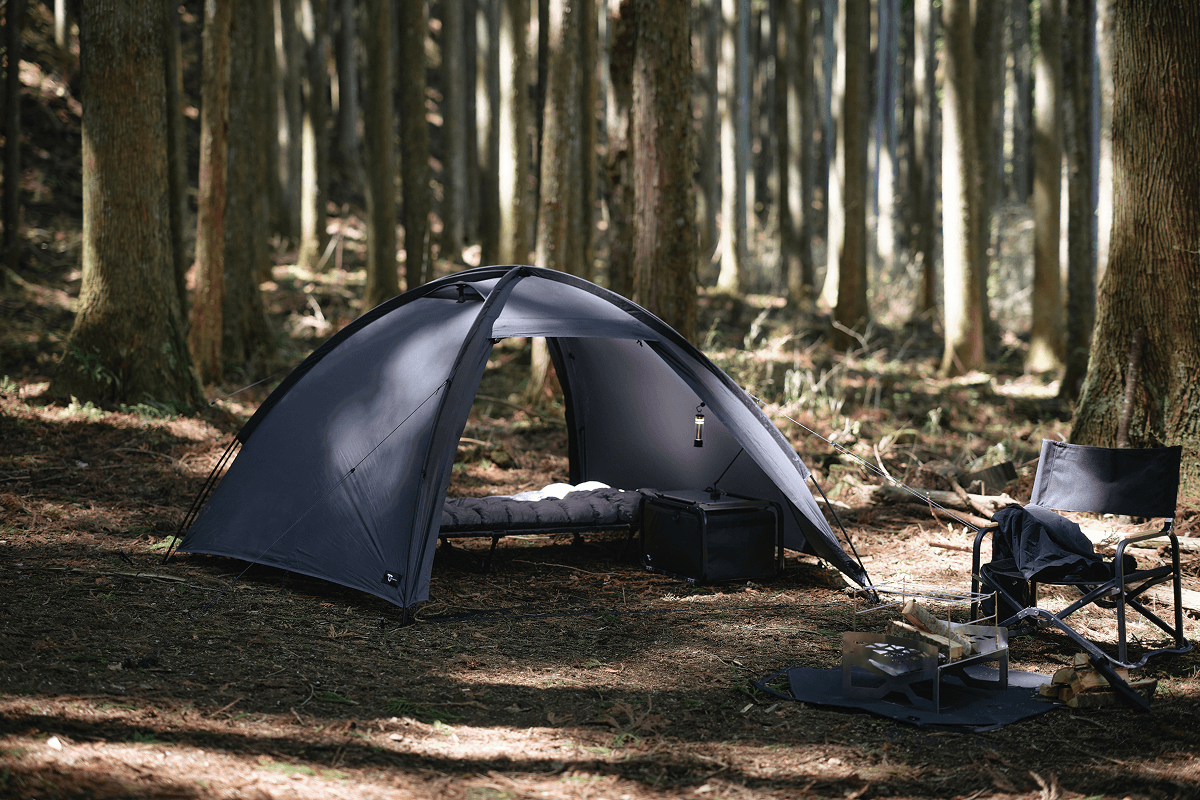
The "Diafort TC Solo Tent" is a single-pole tent recommended for those who want to enjoy solo camping in style. Its design, reminiscent of a diamond-shaped tarp, appeals to seasoned campers.
By adding a single pole to a single-pole tent—which is known for its easy setup and high ceiling—this design eliminates the common drawbacks of single-pole tents, such as excessive dead space and a sense of confinement.
It uses "TC (poly-cotton)" fabric, which offers excellent light-blocking and breathability. Furthermore, the optional (sold separately) "inner tent" features mesh on all four sides, providing outstanding ventilation. You can enjoy a cool camping experience even in summer without worrying about bugs.
Diafort TC Solo Tent Reviews
Diafort is the best! 😊
I set it up for the first time in the Doji Forest, and it was so easy I thought, "Is that it?" Even as a first-timer, it pitches up beautifully! The design is great, but the interior space is just right for solo camping, and perhaps because of the height, it feels spacious. It’s the perfect size for cozying up in during winter
. I really love that it doesn’t feel cramped. It’s definitely my go-to tent
!
Montope
The "Montope" is a duo shelter tent designed to let you enjoy nature from inside the tent. With its unique box-shaped design, you can enjoy a spacious, open atmosphere.
With mesh panels on all four sides—front, back, left, and right—ventilation is excellent. You can even gaze at the scenery outside through the mesh windows while staying inside the tent.
The optional "inner tent" (sold separately), which allows you to enjoy a traditional Japanese-style floor layout, features mesh on all four sides. Additionally, the inner tent has a transparent TPU window in the ceiling. If you open the main tent’s ceiling, you can lie down and enjoy the scenery or stargaze.
There is also a great value "Set" that includes both the main tent and the inner tent.
Montope Reviews
Perfect for solo camping
It’s awesome that you can see outside even during winter camping! I’m also looking forward to sleeping under the starry sky in the summer.
Tenbi Shelter
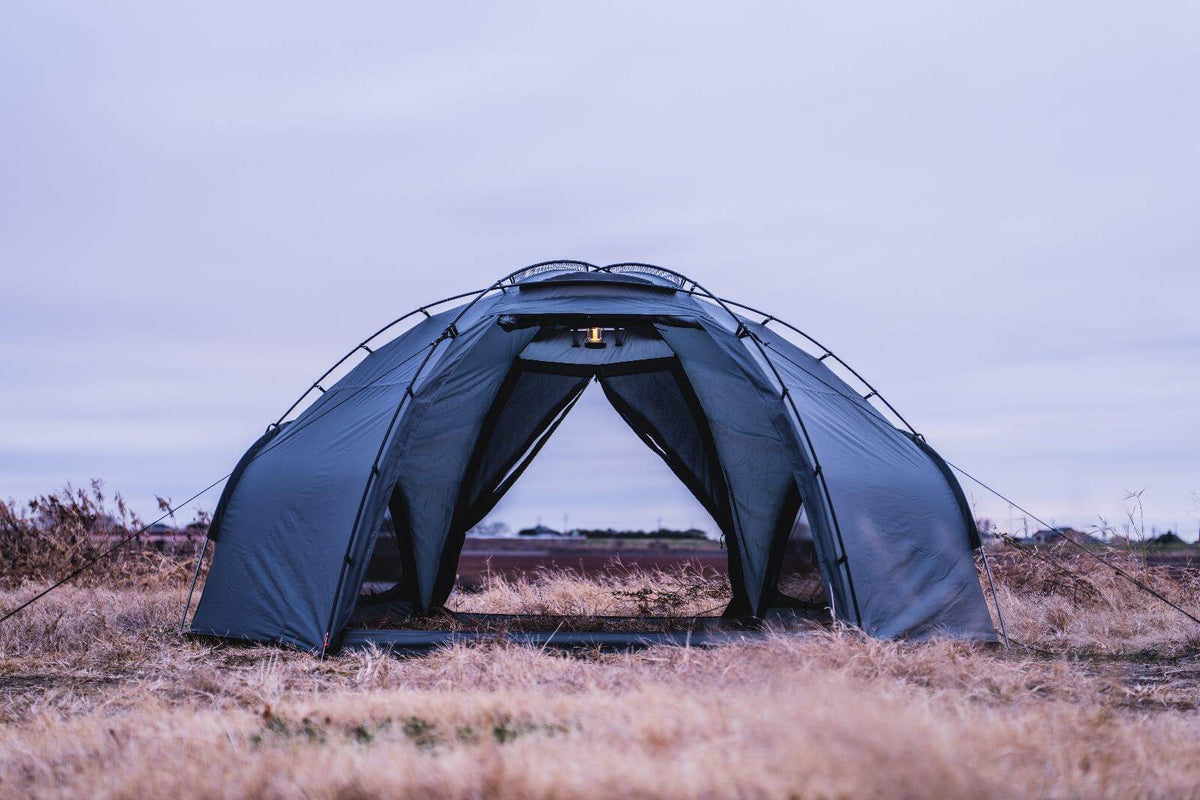
The "Tenbi Shelter" combines the best features of tunnel tents and dome tents. It’s recommended for solo, duo, and family camping.
We’ve taken a non-freestanding tunnel tent—which requires a bit of skill to set up—and added a single diagonal pole to incorporate elements of a freestanding dome tent, making it easier to pitch. It combines the spaciousness of a tunnel tent with the ease of setup of a dome tent.
Two skylight panels are positioned at the top of the front, allowing light to enter the tent interior. The skylight panels can be used as mesh panels or opened or closed, letting you create a comfortable space suited to the season.
The optional "inner tent" (sold separately) keeps you cool in summer without worrying about bugs and warm in winter, and is spacious enough for a family of four to sleep comfortably.
We also recommend the great-value "Tenbi Shelter Set," which includes the main tent, a "roof sheet," and an "inner tent."
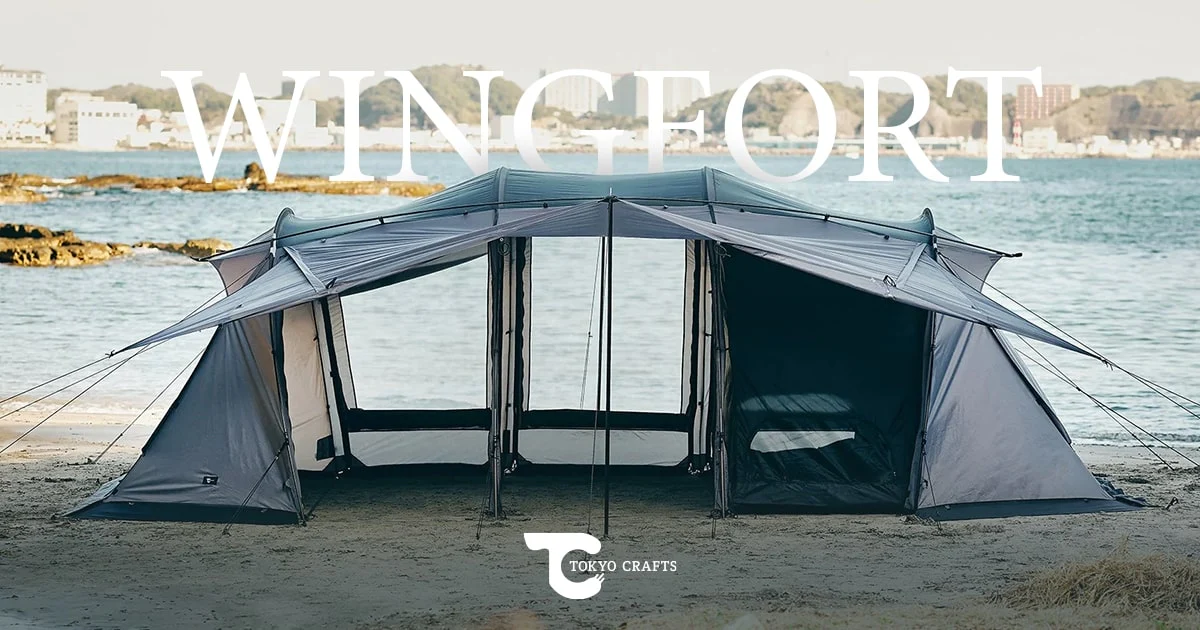
Wing Fort
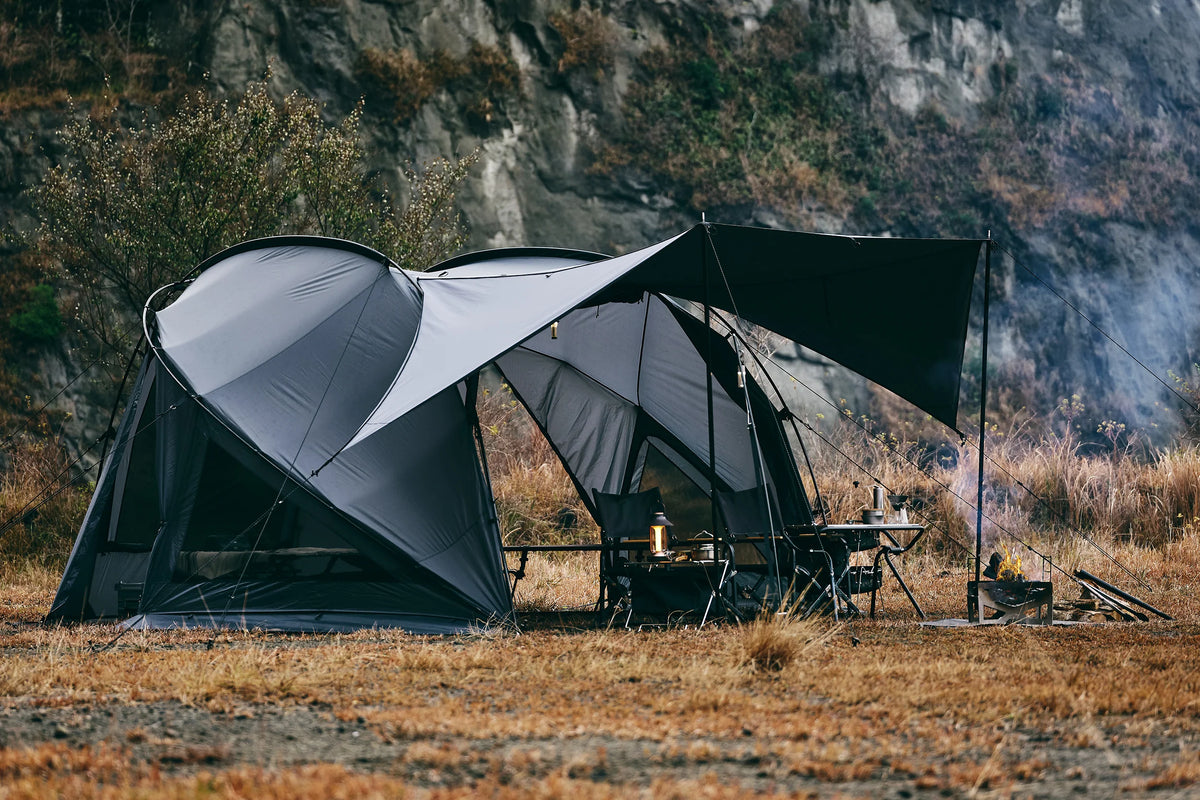
The "Wing Fort" is recommended for family and group camping. Although it is a tunnel tent, it features a double-wall structure with an added outer panel.
Compared to double-wall tents, single-wall tents made of a single layer of fabric are more susceptible to weather conditions. In summer, the interior temperature can rise too high, and in winter, condensation is more likely to form due to temperature differences. Because the Wing Fort has a double-wall structure, it mitigates sunlight and temperature fluctuations to create a comfortable space.
The outer panels can be lifted up on all four sides (front, back, left, and right) using poles (not included in the set) to create a canopy. It is also recommended for use as a living space for large group camping.
You can fully close the main tent while keeping the outer panels raised, so there’s no need to lower them during sudden heavy rain or when sleeping.
The inner tent, which comfortably sleeps a family of four, is a welcome standard feature, making this a great value for the price.
Wing Fort Reviews
A Comfortable Tent
I bought this as a family tent. It blocks
out light well, and the interior is spacious and very comfortable. I really liked being able to flip up the side panels to create a mesh area while enjoying a campfire. I plan to keep using it
.
Grahus
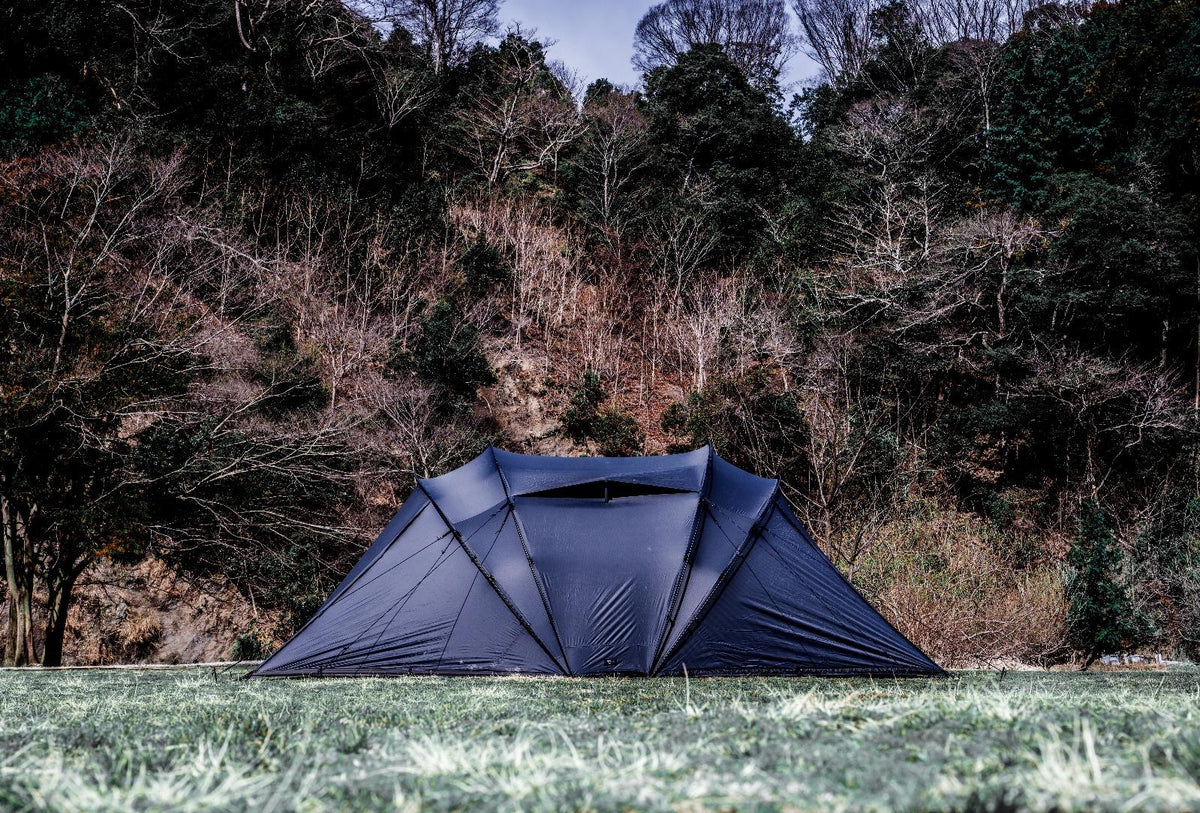
The "Grahus" is a large shelter tent designed around the concept of "portable glamping." Its unique design, which commands an overwhelming presence, is a major attraction.
Measuring 540 x 470 cm with a maximum ceiling height of 260 cm, it offers an incredibly spacious interior where you can relax comfortably.
The large entrance panels at the front and rear can be fitted with optional (sold separately) transparent “TPU windows.” In winter, you can close them up and enjoy the view from inside.
Despite its extra-large size, it can be set up on a 10×10m campsite. This overcomes the common issue with large shelters of having limited setup options.
We also recommend the great value “Full Set,” which includes the tent body along with the optional “Living Sheet” and “TPU Window.”
Find the single-pole tent that’s right for you!
This stylish single-pole tent with a pointed roof stands out at any campsite. It serves as a landmark, making it easier for children to find their way back during family camping trips.
It’s also easy to set up, making it a great choice for those who want to relax and enjoy their camping time.
By keeping the selection tips introduced here in mind, you can choose a single-pole tent that perfectly suits your camping style. We hope you enjoy a comfortable and stylish camping experience with your favorite single-pole tent!
RANKING
ランキング一覧へ