Popular Items in Tents Recommended for Solo Camping


Tents Recommended for Solo Camping


The Art of Choosing a Solo Tent! Discover the Appeal of Solo Tents and How to Choose One

What Are Tents for Solo Camping?
Solo camping lets you fully enjoy time in nature without being disturbed by anyone.
In recent years, partly due to the COVID-19 pandemic, camping—which avoids crowded settings—has become firmly established as a popular activity. Solo camping, in particular, has become a major trend, with videos, TV dramas, and manga showcasing its appeal appearing one after another.
Unlike group camping, where you have fun with friends and family, the appeal of solo camping lies in “savoring the act of camping itself” amidst the natural environment.
When it comes to essential gear for making that alone time stress-free and comfortable, a tent is key.
A solo tent is your very own “home” out in the wilderness.
It must not only provide comfort—allowing you to relax, enjoy coffee and meals, and sleep soundly—but also serve as a shelter to protect you from sudden rain and wind… It has to be a reliable partner.
Tents designed for solo camping are available from various manufacturers, with a wide range of structures, features, and designs. Even if you decide to buy one, first-timers may find themselves unsure of what criteria to use when making a choice.
In this article, we’ll introduce the appeal of solo tents and key points to consider when choosing one. We hope you find this guide helpful.
How to Choose a Tent for Solo Camping

Since solo camping involves spending every moment—from start to finish—on your own, you need to choose a tent with the understanding that you’ll be handling everything yourself: carrying it, setting it up, spending time in it, and taking it down.
It’s not just about how cool it looks—functionality and practicality are also important factors. Here, we’ll explain the key points to consider when choosing a tent.
Tip 1: Choose by Tent Type

"Dome Tents" for Beginners
A “dome tent” refers to a tent that takes on a “hemispherical” shape once set up. Generally, it uses two main poles crossed over each other; the fabric is lifted by the flex of the poles to maintain the hemispherical shape, ensuring a spacious interior.
Another appealing feature is that setup is simple because the tent stands on its own without needing to be secured to the ground with stakes.
Because of its rounded shape, it deflects wind easily and snow doesn’t accumulate on it, making it suitable for winter camping.
However, please note that setting it up requires some physical strength, and it can be bulky relative to its size.
The Classic Stylish Tent: The "Single-Pole Tent"
As the name suggests, a "single-pole tent" is a triangular, pyramid-shaped tent with a pointed roof supported by a single central pole.
Single-pole tents have a striking presence and are great for creating a stylish campsite.
Since there is only one pole, setup and takedown are simple, but because the center is pointed, it is more susceptible to rain and wind.
Additionally, since the tent slopes downward toward the edges, dead space tends to form.
If you're aiming for a rugged, cool look, try a "Pup Tent"
A "pup tent" refers to the military tents (field tents) used by soldiers. They’ve recently become popular among solo campers for their "rugged and cool" look.
With a simple shape like a tarp, it’s easy to set up. Its lightweight and compact design is likely another reason for its popularity.
Many of these military-style products blend naturally into the surroundings, creating a true “secret base” atmosphere.
However, because they offer an open, "exposed" feel, getting a good night’s sleep during an overnight camping trip will be difficult without a groundsheet or inner tent. In winter, you’ll also need to take measures against the cold.
Tip #2: A Lightweight Tent Is Best for Solo Camping

When choosing a tent for solo camping, the key factor to consider is “weight.” Since you have to carry all your camping gear by yourself, a lightweight tent is preferable.
Your mode of transportation to the campsite is also a factor. If you’re using a free-site campground where you can park right next to your tent, the distance you need to carry it is short, so any weight you can manage to load and unload from your car is fine.
If you’re traveling by bicycle or motorcycle, or if you’re backpacking, you’ll need to choose a lightweight tent.
Tip 3: Choose the Material Based on Your Style

The comfort of a solo camping tent varies depending on the material. Choose a tent made of a material that suits your camping style.
Hiking Camping → Polyester
When enjoying solo camping while hiking, you’ll be carrying all your camping gear on your back, so keeping your load as light as possible is best. Therefore, a tent that folds down compactly and is made of lightweight material is ideal.
Since you’ll be using it in the mountains where the weather can change quickly, it’s also important to choose a material that’s resistant to rain and wind.
"Polyester" is lightweight, water-resistant, and quick-drying, making it perfect for solo hiking camping. However, since it is flammable, you must not build a campfire near the tent.
If you want to enjoy a campfire → TC fabric
"TC fabric" is a blend of polyester and cotton. It offers excellent breathability and moisture permeability, resists condensation, and provides high light-blocking properties.
It is also more resistant to sparks than pure synthetic fabrics, making it ideal for those who want to enjoy campfires—one of the highlights of solo camping.
However, compared to polyester, it is heavier and less resistant to rain. We recommend models with a water-repellent coating to enhance waterproof performance.
Tip 4: For a comfortable camping experience, a "2-person" tent is ideal

For solo camping,
- you want to relax and enjoy some alone time...
- ...or you want to stretch out and feel a sense of openness when you sleep...
If this sounds like you, make "comfortable living space" a priority when choosing a tent.
A two-person tent offers more living space. While it’s larger and heavier than a solo tent, if you’re traveling by car, we recommend choosing a “two-person” tent rather than insisting on a solo one.
Tip 5: We recommend a double-wall tent structure

As the name suggests, a “double-wall” tent features a structure with two layers of walls. It consists of a double-layered structure where a waterproof sheet is placed over a single-wall tent made of a single piece of fabric and poles.
Because the walls are double-layered, this design is less affected by outside temperatures and is highly resistant to wind and rain. It also helps prevent condensation inside the tent, which is a common problem during cold weather. This is because condensation forms between the inner tent and the inner side of the outer waterproof sheet, making the living space less likely to get wet.
However, as expected, it is heavier than a single-wall tent, so checking the weight is essential.
How to Choose #6: Be Sure to Check Functionality

To ensure a comfortable solo camping experience, be sure to check the tent’s functionality as well.
Water Resistance
Water resistance refers to "how much water pressure the tent can withstand." In other words, it refers to the fabric’s ability to prevent rain and other moisture from seeping through.
Water resistance is quantified; for example, “1,000mm water resistance” means the tent can withstand water pressure up to 1,000mm without water seeping through.
As a general guideline,
- 500mm water resistance is suitable for light rain
- 1,000–1,200 mm: normal rain
- 1,500 mm or higher: heavy rain
. While a higher water resistance rating offers greater peace of mind, it also reduces breathability, so you’ll need to choose a tent with ventilation features.
With a vestibule
A tent’s vestibule is the space created by extending a canopy in front of the main tent body, which serves as a sleeping area.
Creating a vestibule allows you to store shoes and gear there, freeing up more space inside the tent.
You can also set up a chair and a small table in the vestibule to enjoy meals or coffee breaks, or take a nap while shielded from the sun.
With a solo tent that includes a vestibule, you can enjoy camping without having to bring a tarp.
Ventilation
"Ventilation" in a tent refers to its airflow, air exchange, and air circulation functions. Since air tends to become stagnant inside a tent, this is an essential feature, especially for solo camping trips that involve overnight stays.
Some products feature "circular ventilation," which efficiently circulates air to prevent condensation by drawing in fresh outside air through the lower part of the tent (under-ventilation) and expelling the warm air inside through the upper part (top ventilation).
Skirt
There is inevitably a gap between the tent and the ground. The "skirt" prevents wind, rain, and insects from entering through this gap.
If you have a solo camping tent that comes with a skirt, you won’t need to make one yourself.
However, while blocking wind, rain, and insects, this also reduces airflow, which can cause heat and odors to build up in the summer. Since the skirt is close to the ground, it tends to get muddy on rainy days.
A type that can be easily rolled up and secured when it’s hot, or removed and washed, would be much easier to handle.
TOKYO CRAFTS’ Recommended Solo Tents
Here are our recommended solo tents from "TOKYO CRAFTS," a Japanese original camping gear brand that combines functional beauty with high-quality design.
① Diafort TC Solo Tent

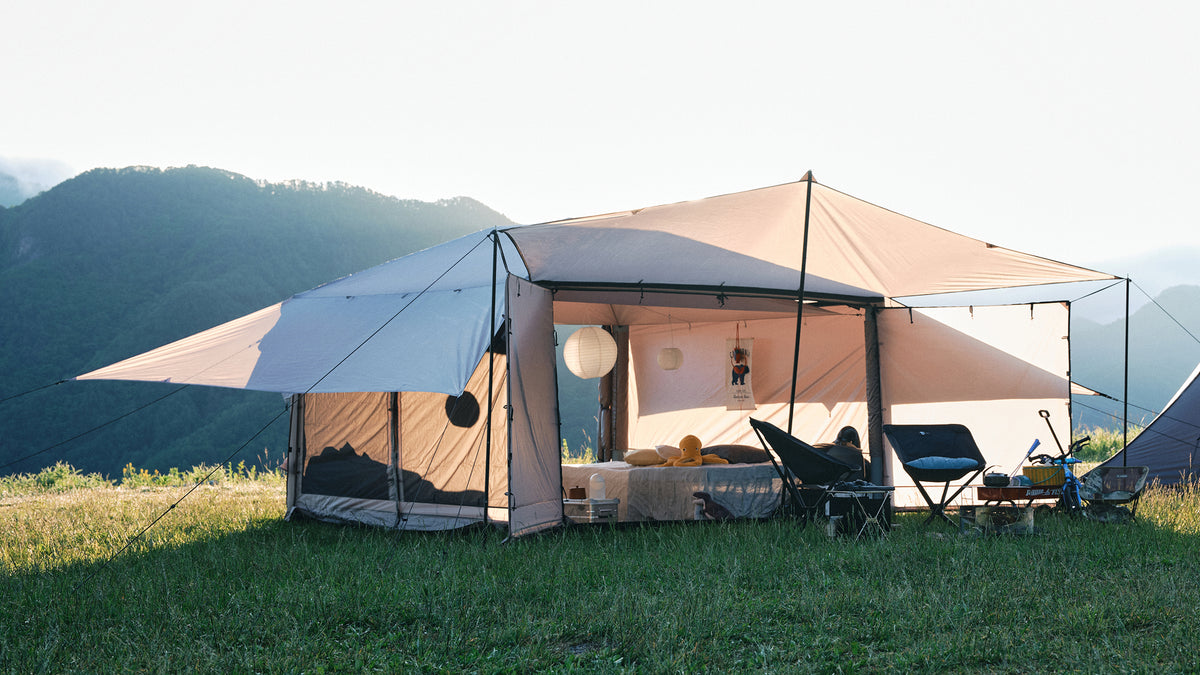
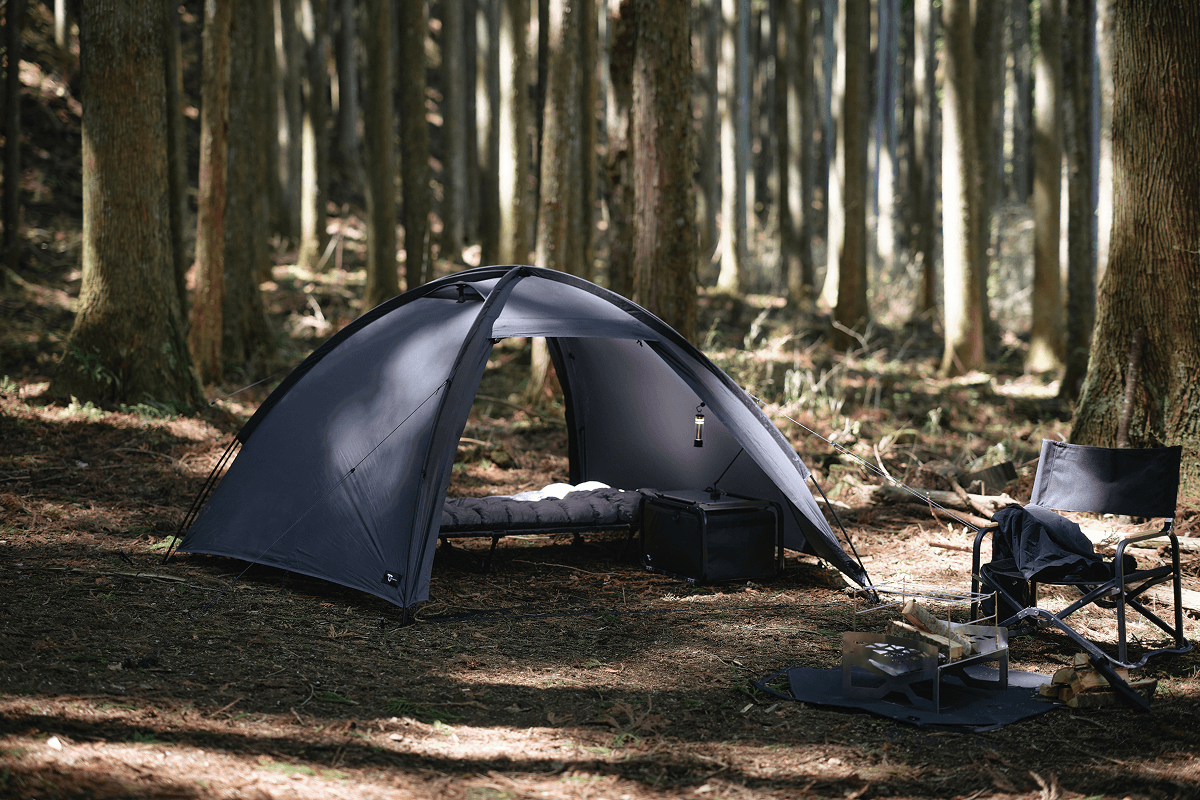
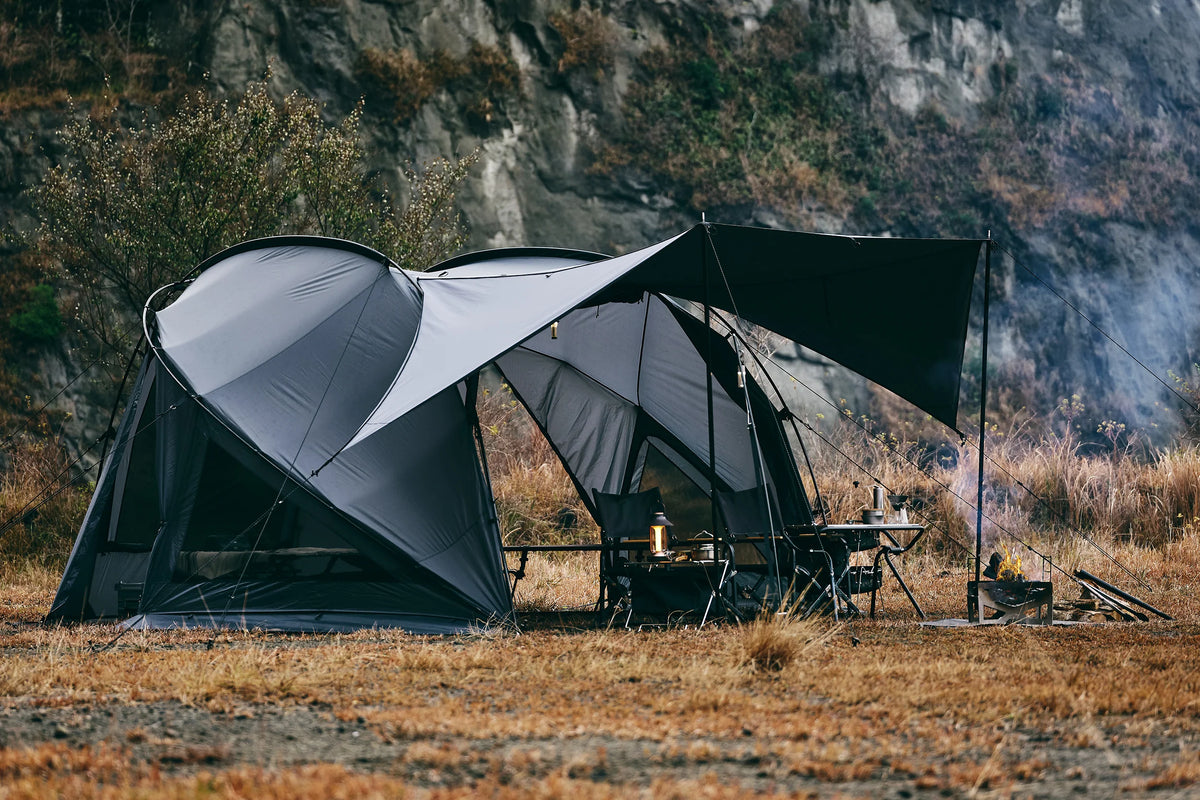
The "Diafort TC Solo Tent" is perfect for those who aren’t satisfied with traditional solo tents that are low in height and have cramped living spaces. The interior offers enough headroom to stand up, and the living space is free of dead zones.
With a tarp-like shape, it’s easy to set up. It offers an exceptional sense of openness, and the front panel is adjustable, allowing for flexible customization.
Packed with user-friendly features like excellent ventilation and a roll-up skirt, you’re sure to stay comfortable. Made from TC fabric with high breathability, moisture permeability, and light-blocking properties, it packs down compactly.
② Nightranger 2P

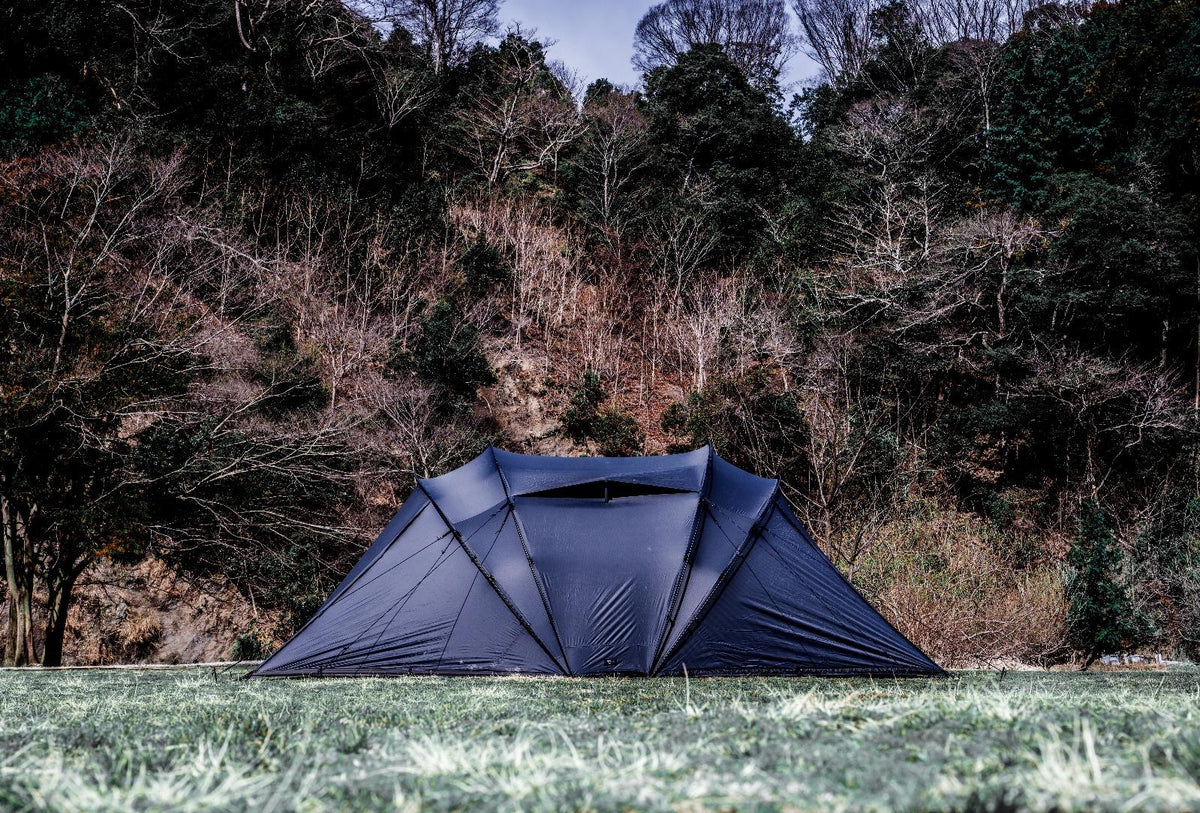
The "Night Rover 2P" features a lightweight and easy-to-set-up design, making it perfect for a duo or a luxurious solo camping experience.
Despite its compact size, the interior height reaches up to 110 cm, so you won’t feel cramped. It features a wide opening with a maximum width of 180 cm and a spacious vestibule, creating a sense of openness.
The standard hanging inner tent accommodates up to two people, and even when used for solo camping, it provides ample space to store your gear.
Its self-supporting three-cross-frame structure allows for quick setup and takedown. Once attached, the inner tent and the optional dedicated groundsheet can be removed without being taken down.
③ Tarvis

The "Tarbis" is a 3-way tent that can be used as a cot tent when placed on a cot, as a standalone solo tent, or in a "kangaroo style" inside a shelter.
It’s lightweight and easy to set up, featuring a self-supporting, intuitive cross-pole structure. Placing it over a cot protects against night dew and insects while minimizing contact with the ground. When not using a cot, it serves as a compact solo tent.
It is spacious enough to fit a single sleeping pad, with convenient storage space on both sides.
Its compact packed size makes it ideal for touring and backpacking trips.
Please consider pairing it with the UT Cot.
③ Tenbi Shelter

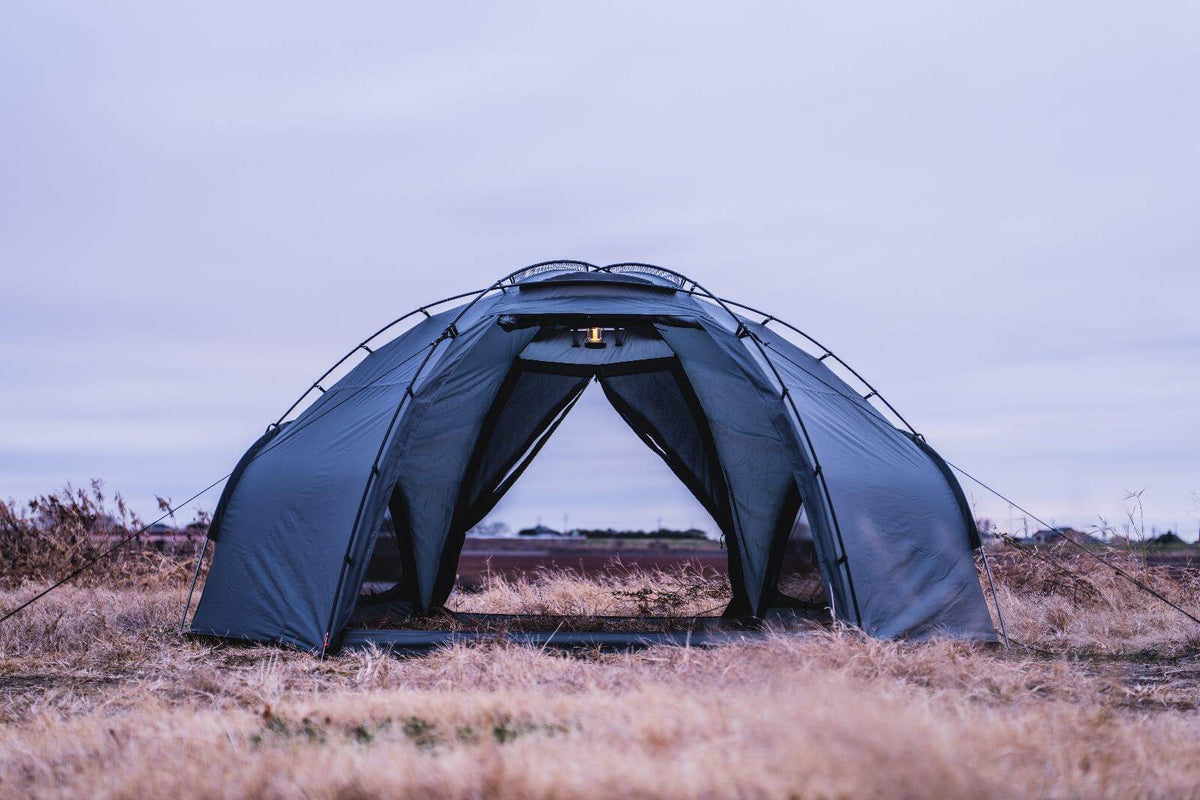
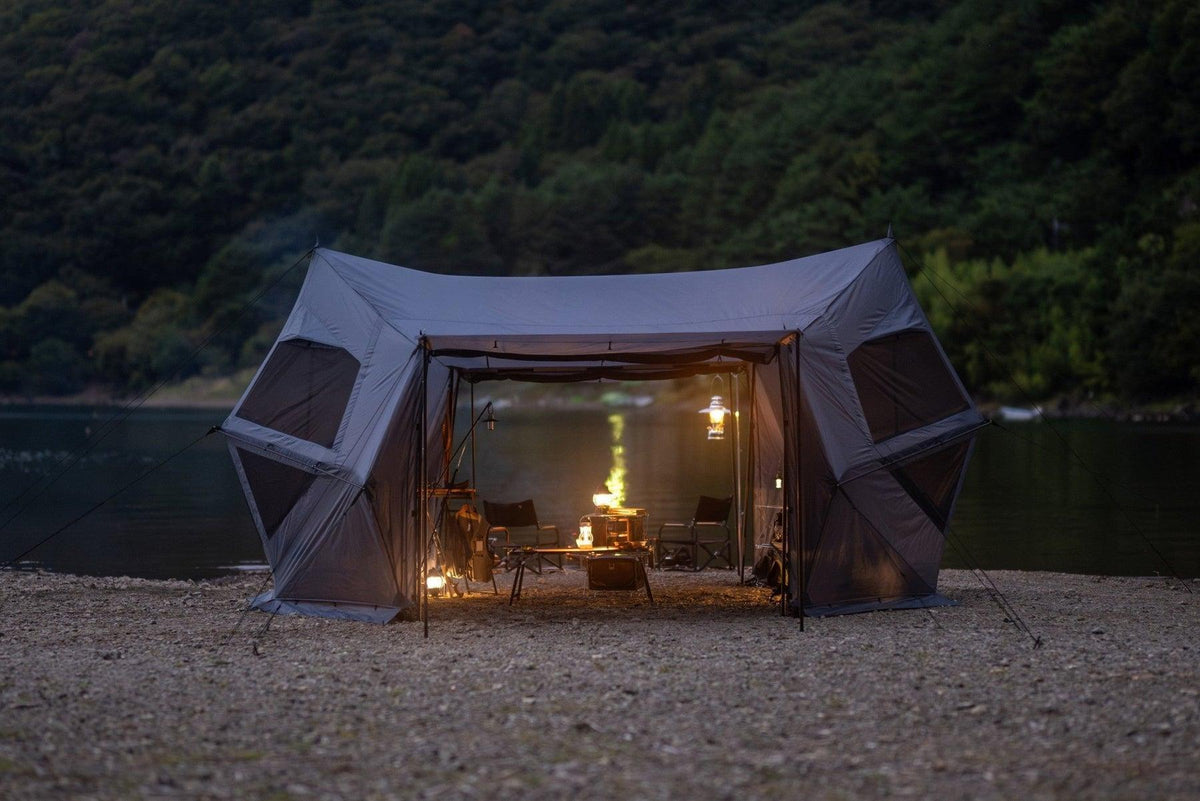
The "Tenbi Shelter" is a shelter that combines a three-pole frame structure for easy setup with an open interior environment.
It can be set up quickly and easily, creating an open space where you can feel the outdoors while staying inside.
The front features a canopy, allowing you to comfortably cook or take a nap in the vestibule while sheltered from rain and sunlight.
Its lightweight design allows for compact packing, making it easy to carry.
When used with the optional inner tent, groundsheet, and floor mat, it makes your camping experience even more comfortable.
Additionally, the TPU window is recommended for those who want to stay cozy while enjoying the scenery during winter camping.
Get a tent designed specifically for solo camping and enjoy the freedom of the outdoors!

To comfortably enjoy your time alone on that dream solo camping trip, you need to choose a dedicated tent that perfectly matches the camping lifestyle you desire.
Use the tips on choosing a solo camping tent we’ve shared here to find your ideal tent and enjoy solo camping in the great outdoors.
RANKING
ランキング一覧へ