Popular Items in 5-person tent

 ポイント10%
 ポイント15%
 ポイント10%ポイント15%
 ポイント10%ポイント15%
 ポイント10%ポイント15%
5-person tent
 ポイント10%ポイント15%
 ポイント10%ポイント15%
ポイント10%ポイント15%
ポイント10%ポイント15%
ポイント10%ポイント15%
ポイント10%ポイント15% ポイント10%ポイント15%
 ポイント10%ポイント15%
 ポイント10%ポイント15%
ポイント10%ポイント15%
ポイント10%ポイント15% ポイント10%ポイント15%
 ポイント10%ポイント15%
 ポイント10%ポイント15%
 ポイント10%ポイント15%
 ポイント10%ポイント15%
 ポイント10%ポイント15%
 ポイント10%ポイント15%
 ポイント10%ポイント15%
 ポイント10%ポイント15%
 ポイント10%ポイント15%
 ポイント10%ポイント15%ポイント10%ポイント15%

 ポイント10%ポイント15%
 ポイント10%ポイント15%
 ポイント10%ポイント15%
 ポイント10%ポイント15%
 ポイント10%ポイント15%
 ポイント10%ポイント15%
 ポイント10%ポイント15%
 ポイント10%ポイント15%
 ポイント10%ポイント15%
 ポイント10%ポイント15%
 ポイント10%ポイント15%
 ポイント10%ポイント15%
 ポイント10%ポイント15%
 ポイント10%ポイント15%
 ポイント10%ポイント15%
 ポイント10%ポイント15%
 ポイント10%ポイント15%
 ポイント10%ポイント15%
 ポイント10%ポイント15%
 ポイント10%ポイント15%
ポイント10%ポイント15%
ポイント10%ポイント15% ポイント10%ポイント15%
 ポイント10%ポイント15%
 ポイント10%ポイント15%
 ポイント10%ポイント15%
 ポイント10%ポイント15%
 ポイント10%ポイント15%
 ポイント10%ポイント15%
 ポイント10%ポイント15%
 ポイント10%ポイント15%
 ポイント10%ポイント15%
Perfect for Family Camping! How to Choose a 5-Person Tent and Recommended Products
If you want to enjoy camping with family or friends, a 5-person tent is highly recommended.
However, since many brands sell a wide variety of 5-person tents with different types, materials, and features, many people are honestly unsure which one to choose.
In this article, we’ll provide a detailed overview of 5-person tents, including usage scenarios and how to choose the right one. We’ll also introduce TOKYO CRAFTS’ recommended 5-person tents.
If you want to enjoy a lively and comfortable camping trip in a 5-person tent, please use this as a reference.
When You Need a 5-Person Tent
5-person tents are ideal for family camping. Not only do they offer plenty of space, but many models also feature high ceilings, so even when used by a large group, they don’t feel cramped.
Among 5-person tents, “two-room tents” and “tunnel tents” with removable inner tents provide even more spaciousness. This makes them ideal as a living area for group camping.
Because 5-person tents are large, they are difficult to set up alone and are not suitable for solo camping. However, two people can set them up without any problems. For those who want to relax in comfort, we also recommend using them for duo (two-person) camping.
How to Choose a 5-Person Tent
By keeping the following five points in mind, you can select a 5-person tent that’s both practical and perfectly suited to your camping style.
- Tent Type
- Material
- Number of Users
- Water Resistance & Light Blocking
- Functionality
How to Choose #1: First, Understand the Types of Tents
5-person tents are mainly divided into the following six types based on their shape.
- Dome Tent
- Single-Pole Tent
- Two-room tent
- Lodge-style tent
- Tunnel Tent
- Shelter Tent
Each type has different features, so choose the one that best suits your camping style.
-Dome Tent
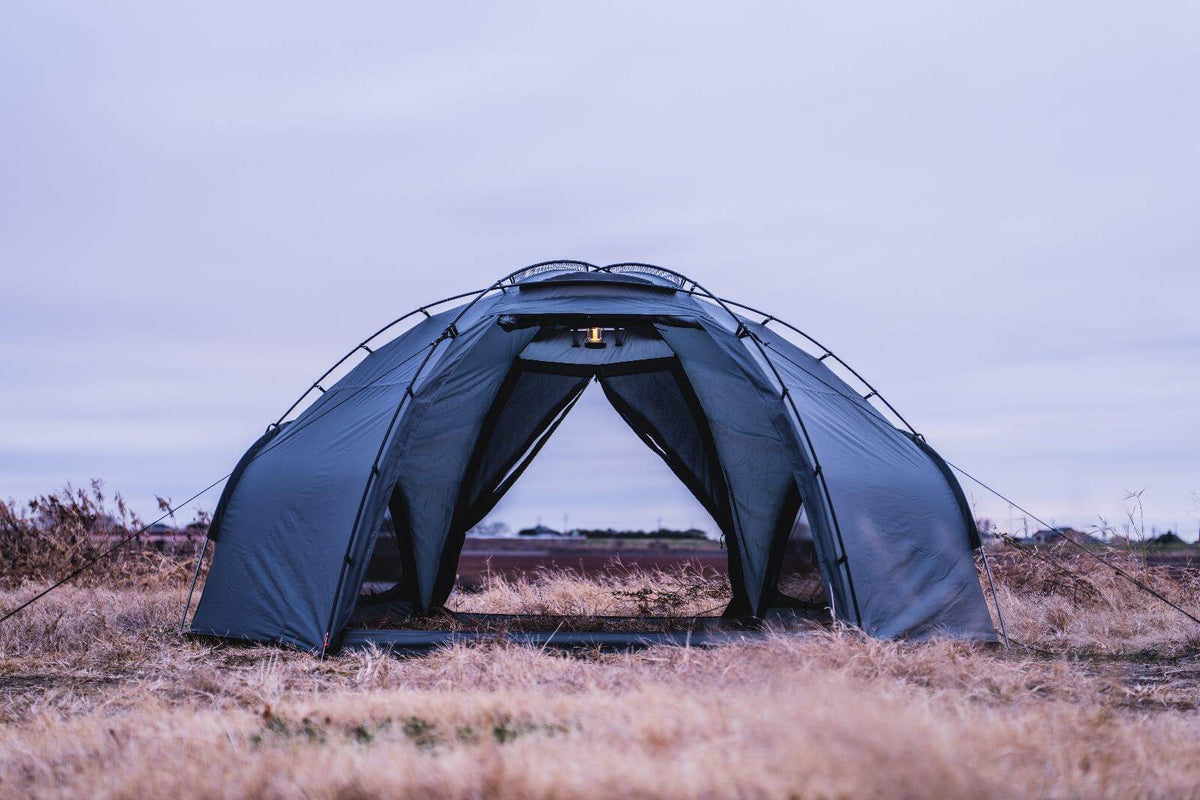
The "dome tent" has a hemispherical shape.
Setup involves crossing two poles and inserting them into the tent body, making it easy for even beginners to set up alone. Another appealing feature is its spacious interior, with a wide ceiling that creates a sense of openness.
However, since dome tents are single-room structures, they are typically used as sleeping quarters. To create a living space, you’ll need to add a tarp.
-Single-Pole (Teepee) Tent
The "single-pole tent" is set up using a single center pole. Single-pole tents are further classified into the conical "teepee-style" and the "bell-style," which features upright walls.
Although they may look difficult, they are surprisingly easy to set up, and even beginners can pitch them without any trouble.
However, because the roof slopes downward, a drawback is that it can feel cramped and create dead space. The "bell-shaped" style has walls that rise up, so it feels less cramped and has less dead space than the "teepee-style."
Single-pole tents come in a wide range of sizes; if you choose a larger size, you can comfortably secure both a bedroom and a living space with just one tent.
- Two-room tent
As the name suggests, a “two-room tent” features two separate rooms. Since it provides both a bedroom and a living area, you can camp comfortably without needing a tarp.
If you remove the inner tent used as a bedroom, you can create a large open space. It can also be used as a living area for large groups.
Due to their large size, two-room tents can be difficult to set up alone.
-Lodge-Style Tent
Tents shaped like small cabins, reminiscent of mountain huts, are called “lodge-style tents.”
In addition to their charming appearance, their spacious interior—which feels just like home—is a major attraction.
Setup involves assembling the poles and draping the main tent over them. There are no particular tricks to it, so even beginners can set it up without any problems.
However, the poles are typically made of steel, so their weight is a drawback. They also tend to be relatively expensive.
-Tunnel-style tent
"Tunnel-style tents" feature several arched poles arranged in a row. Because they resemble a fish cake, they are also called "fish cake tents."
Their spacious interior is a major draw, and many models allow for the attachment of a suspended inner tent, making them a type of two-room tent.
Since they are classified as “non-freestanding tents” that require staking down, setting them up alone can be difficult.
-Shelter Tents
Tents without a floor or sleeping area are classified as “shelter tents.” Shelter tents come in various shapes, such as military-style canopies and single-pole types.
Since they lack a floor, they are well-suited for sleeping on a cot. We also recommend the “kangaroo style,” where you pitch a small dome tent underneath the shelter tent to use as a sleeping area.
How to Choose #2: There Are Four Main Types of Materials
Tents are primarily made from the following materials.
- Polyester
- Cotton
- TC (Poly-Cotton)
-
Nylon
Each material has its own pros and cons, so choose one that suits your camping style and budget.
-Polyester
"Polyester" is the most commonly used material for tents. It is lightweight and dries quickly, making it easy to handle, and its reasonable price is a major appeal.
However, its poor breathability makes it prone to condensation, and it can feel stuffy in the summer. Additionally, its low flame resistance means it’s susceptible to holes from sparks.
-Cotton
Tents made of "cotton" are prized for their pleasant texture.
Because it is highly breathable, it resists condensation, keeping you cool in summer and warm in winter. Another advantage is its high flame resistance, making it less likely to develop holes even if exposed to sparks.
However, they are quite heavy, making them difficult to carry. They also take a long time to dry, requiring more maintenance. Prices tend to be on the higher side.
-TC (Poly-Cotton)
"TC (Poly-Cotton)" is a blend of polyester and cotton. It combines the benefits of both materials.
It offers better breathability and flame resistance than polyester, and is reasonably priced. It also dries faster than cotton, is lightweight, and has a pleasant texture.
-Nylon
"Nylon tents" are highly quick-drying and lightweight. They are also highly durable and are often used for mountaineering tents in harsh environments.
While its high water absorption is a drawback for a tent, this issue is resolved by choosing "silnylon," which is impregnated with silicone. However, it tends to be more expensive than polyester.
Tip #3: Choose a tent for one more person than your group size for greater comfort
Typically, tents are rated for a specific number of people. However, this rating is based on the bare minimum number of people who can sleep inside.
If you want to sleep comfortably, it’s best to choose a tent rated for “the actual number of users plus one.”
Tip 4: Pay Attention to Water Resistance and Light Blocking
To ensure a comfortable stay in your tent, pay attention to water resistance and light blocking.
"Water resistance" refers to the tent's ability to prevent water from entering and is measured in "mm." A water resistance rating of around 2,000 mm ensures that water won't seep inside even during prolonged heavy rain.
However, a higher water resistance rating does not necessarily mean greater comfort. If the water resistance is too high, ventilation suffers, and you may feel stiflingly hot during summer camping. Consider the season you’ll be using it in and choose a tent with an appropriate water resistance rating.
As for cotton tents, the fabric absorbs water and swells to prevent water from entering. Even with a low water resistance rating, there is no need to worry about water seeping in.
If you’re camping in the summer, “shade” is also important. Tents with high shade block the sun’s heat, so the temperature inside the tent doesn’t rise as easily. They also block UV rays, so you can expect them to help prevent sunburn.
Tip 5: High-Performance Tents Last Longer
Tents with high functionality—such as high water resistance and light-blocking capabilities—tend to be more durable and last longer than those with lower functionality.
As a tent is used repeatedly, the fabric and coating gradually deteriorate due to rain and UV rays. If a tent has too low a water resistance rating, its waterproofing will deteriorate, making it more prone to leaks.
On the other hand, a tent with high UV protection helps prevent the fabric and coating from deteriorating due to UV rays. As a result, the tent’s usable lifespan is extended.
TOKYO CRAFTS Family Tents
TOKYO CRAFTS also offers a lineup of tents perfect for family and group camping.
Here’s a detailed look at three unique tents.
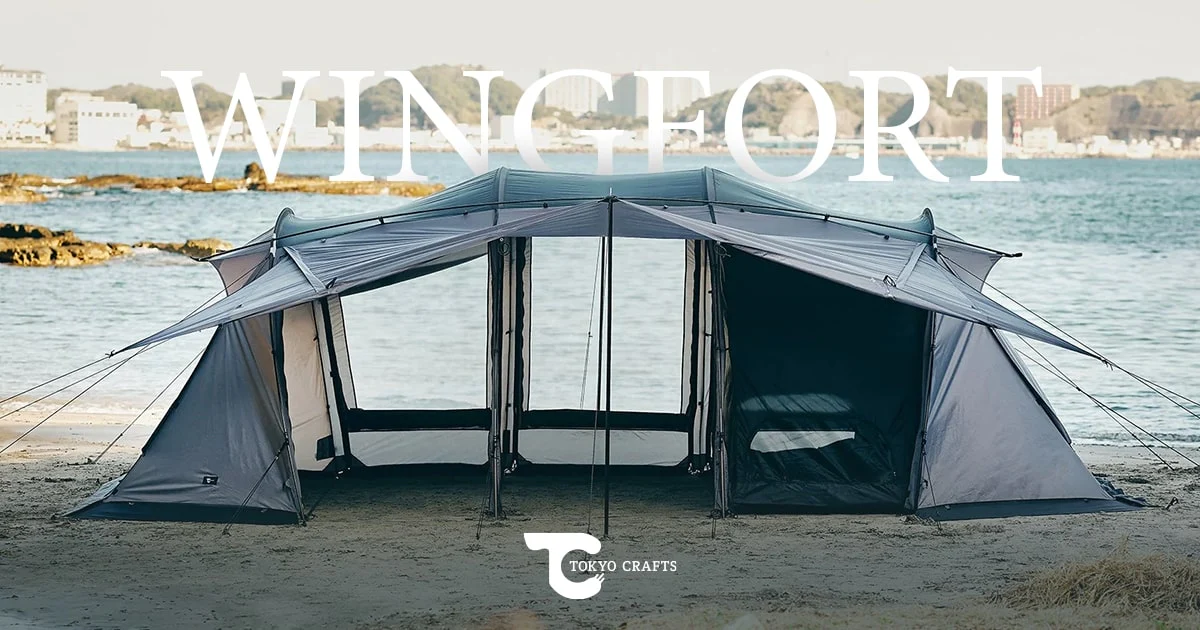
Wing Fort
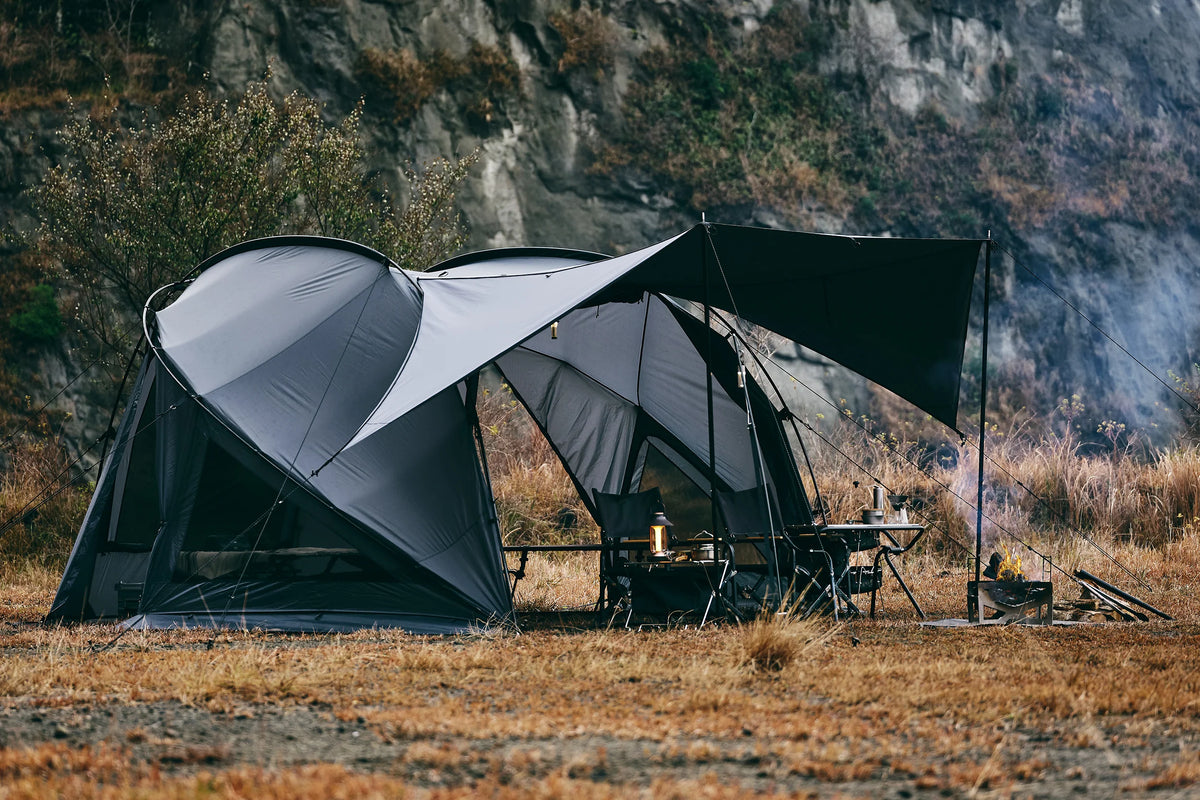
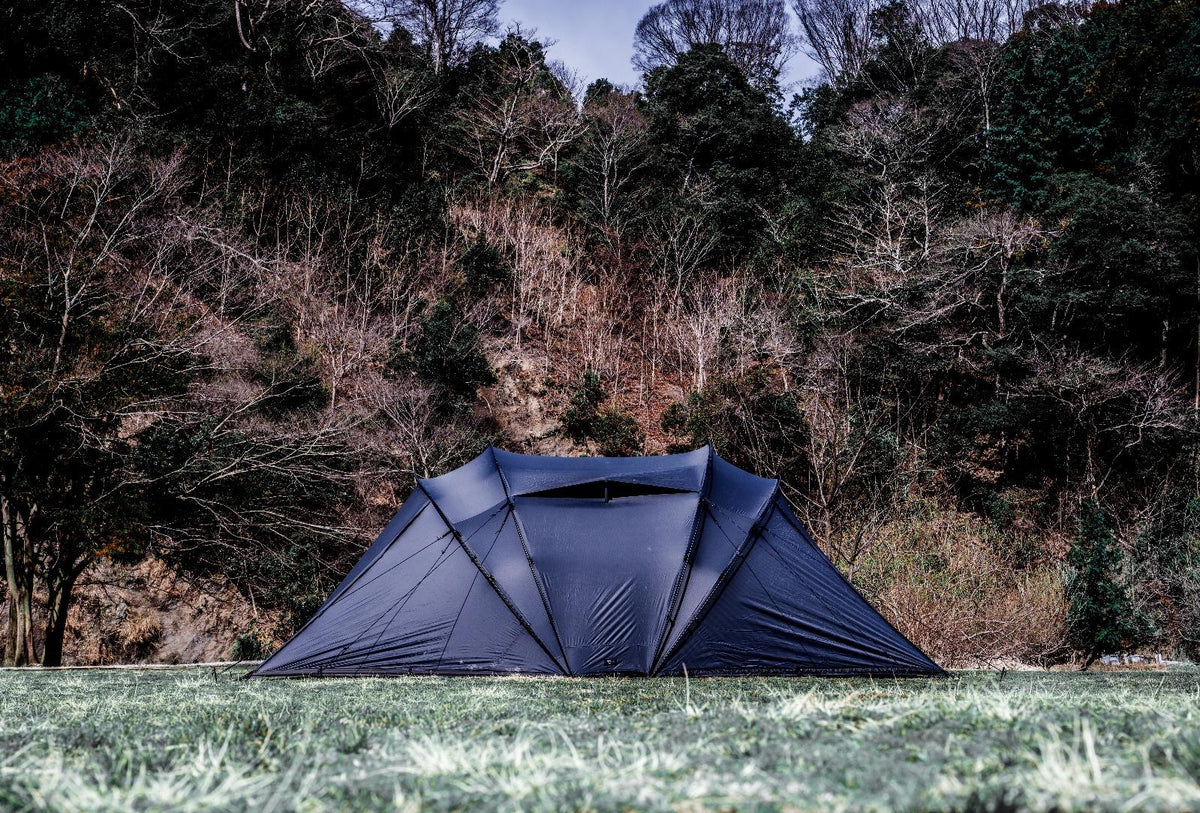
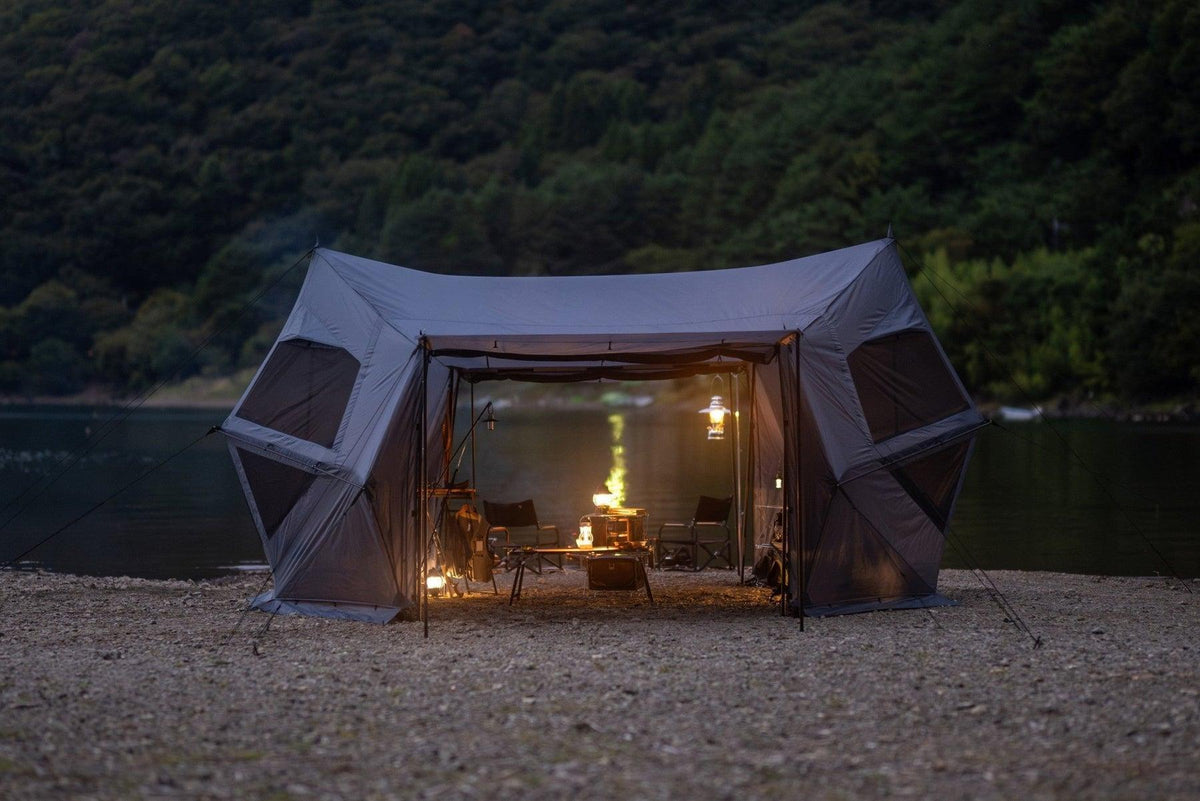
The "Wing Fort" is an advanced tunnel tent featuring an outer panel added to the main tent body. The outer panel blocks heavy rain and sunlight, allowing you to enjoy camping comfortably in any weather, all year round.
By raising the outer panel with poles, it can be used as a canopy. This further expands the spacious living area that is a hallmark of tunnel tents.
Thanks to the double-layered structure of the outer panel and the main tent, you can create a fully enclosed space by closing the main tent. There’s no need to rush to lower the canopy even if it suddenly starts raining.
The inner tent, which comfortably sleeps a family of four, is a welcome standard feature.
Tenbi Shelter Tent
The "Tenbi Shelter" combines the ease of setup of a dome tent with the livability of a tunnel tent. It features a unique design where a third pole is positioned diagonally across two parallel poles.
Adding the third pole makes it a freestanding tent, allowing even beginners to set it up easily.
Two mesh panels are positioned on the front roof. Even when the tent is fully closed, you can let in light and look up at the sky.
The "inner tent," which comfortably sleeps a family of four, is sold separately. We also recommend the "Tenbi Shelter Set," which includes the inner tent and a roof sheet.
Serenity 2-Room Tent
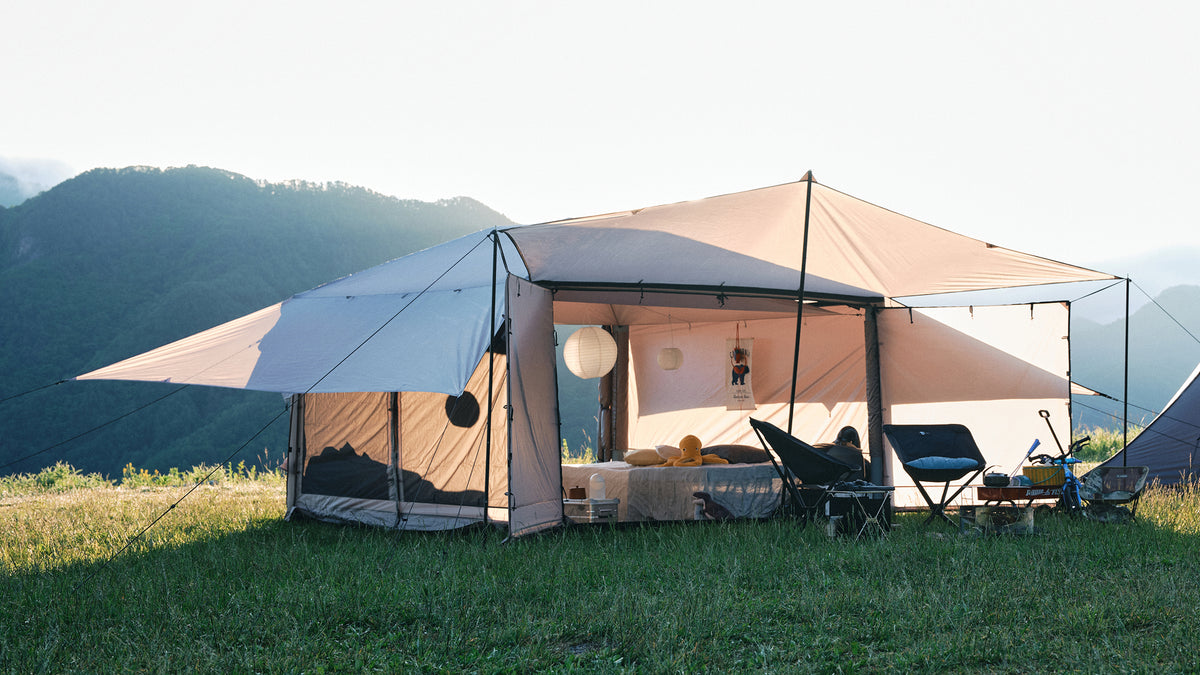
The "Serenity 2-Room Tent" lets you enjoy camping without needing a tarp. It makes it easy to keep an eye on small children, making it ideal for family camping.
Although it is a spacious, large tent, it is a freestanding tent with cross-braced poles, making it easy to set up even for beginners. Once you get the hang of it, two people can set it up in about 10 minutes.
You can choose from various sets to suit your camping style. If you plan to use it as a living space for a large group, we recommend the "Serenity 2-Room Tent Fly" (tent body only). For family camping, the "Serenity 2-Room Tent Standard Set," which includes an inner tent and shade, is highly recommended.
Get a 5-person tent and enjoy family or group camping!
If you’re camping with family or a group, we recommend a spacious 5-person tent.
Plus, a 5-person tent is great for serving as a living space for a large group or for enjoying plenty of room during a duo camping trip.
Be sure to choose your favorite 5-person tent and enjoy a lively camping trip with your family and friends.
RANKING
ランキング一覧へ
ポイント10%ポイント15% ポイント10%ポイント15%
 ポイント10%ポイント15%
 ポイント10%ポイント15%
 ポイント10%ポイント15%
 ポイント10%ポイント15%
ポイント10%ポイント15%
ポイント10%ポイント15% ポイント10%ポイント15%
 ポイント10%ポイント15%
ポイント10%ポイント15%
ポイント10%ポイント15%

 ポイント10%ポイント15%
ポイント10%ポイント15%
ポイント10%ポイント15% ポイント10%ポイント15%
 ポイント10%ポイント15%
 ポイント10%ポイント15%
ポイント10%ポイント15%
ポイント10%ポイント15%
ポイント10%ポイント15%
ポイント10%ポイント15%
ポイント10%ポイント15%
ポイント10%ポイント15%
ポイント10%ポイント15%
ポイント10%ポイント15%
ポイント10%ポイント15%
ポイント10%ポイント15% ポイント10%ポイント15%
ポイント10%ポイント15%
ポイント10%ポイント15%
ポイント10%ポイント15%
ポイント10%ポイント15%
ポイント10%ポイント15%
ポイント10%ポイント15%
ポイント10%ポイント15%
ポイント10%ポイント15%
ポイント10%ポイント15%
ポイント10%ポイント15%
 ポイント10%ポイント15%
 ポイント10%ポイント15%
ポイント10%ポイント15%
ポイント10%ポイント15% ポイント10%ポイント15%
 ポイント10%ポイント15%
 ポイント10%ポイント15%
ポイント10%ポイント15%
ポイント10%ポイント15% ポイント10%ポイント15%
 ポイント10%ポイント15%
 ポイント10%ポイント15%
 ポイント10%ポイント15%
 ポイント10%ポイント15%
 ポイント10%ポイント15%
 ポイント10%ポイント15%
SEE MORE (その他オススメ商品)
ポイント10%ポイント15% ポイント10%ポイント15%
 ポイント10%ポイント15%