Popular Items in Wind-resistant tent

 ポイント10%
 ポイント15%
 ポイント10%ポイント15%
 ポイント10%ポイント15%
 ポイント10%ポイント15%
Wind-resistant tent
ポイント10%ポイント15% ポイント10%ポイント15%
 ポイント10%ポイント15%
 ポイント10%ポイント15%
ポイント10%ポイント15%
ポイント10%ポイント15% ポイント10%ポイント15%
 ポイント10%ポイント15%
 ポイント10%ポイント15%
 ポイント10%ポイント15%
 ポイント10%ポイント15%
 ポイント10%ポイント15%
 ポイント10%ポイント15%
 ポイント10%ポイント15%
 ポイント10%ポイント15%
 ポイント10%ポイント15%
 ポイント10%ポイント15%
 ポイント10%ポイント15%
 ポイント10%ポイント15%
 ポイント10%ポイント15%
 ポイント10%ポイント15%
 ポイント10%ポイント15%
 ポイント10%ポイント15%
 ポイント10%ポイント15%
 ポイント10%ポイント15%
 ポイント10%ポイント15%
 ポイント10%ポイント15%
 ポイント10%ポイント15%
 ポイント10%ポイント15%
 ポイント10%ポイント15%
 ポイント10%ポイント15%
 ポイント10%ポイント15%
 ポイント10%ポイント15%
 ポイント10%ポイント15%
 ポイント10%ポイント15%
 ポイント10%ポイント15%
 ポイント10%ポイント15%
 ポイント10%ポイント15%
 ポイント10%ポイント15%
 ポイント10%ポイント15%
 ポイント10%ポイント15%
 ポイント10%ポイント15%
 ポイント10%ポイント15%
 ポイント10%ポイント15%
 ポイント10%ポイント15%
 ポイント10%ポイント15%
 ポイント10%ポイント15%
 ポイント10%ポイント15%
 ポイント10%ポイント15%
 ポイント10%ポイント15%
 ポイント10%ポイント15%ポイント10%ポイント15%
A Comprehensive Guide to Wind-Resistant Tents! Discover types and setup methods that keep you safe even in strong winds, plus recommended tents!
When camping or hiking, "wind" greatly affects both comfort and safety. Especially in strong winds, your tent may flap so much that you can’t sleep, and in the worst-case scenario, there’s a risk of it collapsing.
Choosing a wind-resistant tent is essential for enjoying the outdoors with peace of mind.
If you’re considering buying a tent, please use this as a reference.
Features of Wind-Resistant Tents
While outdoor tents generally sold on the market are designed to withstand everyday wind speeds, sudden strong winds can occur in open terrain, near bodies of water, or on high ground.
Tents with a shape that effectively deflects the wind or those with a rigid frame have a lower risk of poles breaking or the tent itself being blown away even in strong winds, allowing you to stay with peace of mind.
Generally, a good rule of thumb is that a tent should be able to withstand wind speeds of around 10 m/s. You can feel more confident choosing products that have undergone thorough wind resistance testing and clearly state their wind resistance performance on the product page.
Types of Wind-Resistant Tents
The following tent designs are less susceptible to wind:
- Single-pole tents
-
Dome Tents
- Tunnel tents
Since each has a different structure and is suited to different camping styles, it is important to understand their characteristics before making a choice.
Single-Pole Tent
A single-pole tent is set up by erecting a single pole in the center and is characterized by its conical or pyramid-shaped silhouette. This shape has the major advantage of being highly stable even in strong winds, as it disperses and deflects wind pressure across the entire structure rather than concentrating it at a single point.
In particular, even when the wind blows from the side, the sloped tent walls allow the wind to escape, resulting in less flapping and a slightly lower risk of collapse. For this reason, they are often used at open campsites and are popular as solo or two-person tents.
On the other hand, the wind resistance of a single-pole tent is greatly influenced by how well it is staked down and how the guy lines are set up. If the setup is sloppy, stability drops dramatically, so it is essential to understand the correct setup method. Also, keep in mind that having a pole in the center slightly limits your layout flexibility.
Dome Tents
Dome tents are the most common tent shape, featuring a self-supporting structure made of multiple crossed poles. Their wind resistance stems from their low center of gravity and curved form, which efficiently deflects wind.
Since they are freestanding, they are less affected by ground conditions, making them easy for beginners to set up stably—a major advantage. Widely used for solo camping, two-person camping, and mountaineering, they offer an excellent balance of wind resistance and ease of use.
Additionally, wind-resistant models use aluminum poles and feature a design that distributes the load across the entire frame. By using stakes and guy lines in combination, you can use them with confidence even in strong winds.
Tunnel Tent
Tunnel tents feature a structure with parallel arched poles, characterized by a very spacious interior. They are primarily used for family camping or as large group tents, and many models are available in a two-room configuration that separates the living area from the sleeping area.
Regarding wind resistance, "proper setup with awareness of the windward and leeward sides" is a prerequisite. By positioning the tent’s short sides perpendicular to the wind’s direction, wind resistance can be minimized. When set up correctly, this shape offers excellent stability.
However, caution is required, as omitting guy lines during setup will drastically reduce wind resistance. It can be said that this is a tent that demands precise setup in exchange for its spacious interior.
How to Pitch a Wind-Resistant Tent
No matter how high-performance a tent is, wind resistance will decrease significantly if it is pitched incorrectly.
Setting Up with Wind Direction in Mind
First and foremost, it is crucial to position the tent with the wind direction in mind. Generally, set up the tent so that the entrance or vestibule faces downwind, while the rear and sides face the wind.
If the wind hits the front of the entrance, it will easily blow into the tent, causing the fabric to flap violently. Particular care is needed with tunnel tents and large tents, as wind pressure from the front places a significant load on the frame.
Use Guy Ropes
Guy lines are often skipped because they seem like a hassle, but they are a crucial element directly linked to wind resistance. Especially at campsites with strong winds, it is essential to secure the tent firmly in all directions.
By stretching the ropes at an angle of about 45 degrees and applying firm tension, you can significantly reduce swaying when the wind hits.
Using all guy points increases the overall rigidity of the tent, which in turn reduces the strain on the frame and fabric.
Choosing the Right Pegs
When it comes to improving wind resistance, the performance of tent stakes is surprisingly often overlooked. While the included stakes are lightweight and easy to handle, they can easily come loose in hard ground or strong winds.
If you’re aiming for a wind-resistant setup, we recommend the following types of stakes:
- Forged stakes (approx. 30 cm)
- A shape that allows them to be driven into the ground at an angle
- A hook design that prevents ropes from slipping off
Instead of driving the pegs straight into the ground, angle them at an incline opposite to the direction of the wind’s pull to make them less likely to come out. Especially with large or family tents, the difference in peg quality directly translates to a difference in stability.
TOKYO CRAFTS’ Wind-Resistant Tents
Here, we introduce TOKYO CRAFTS’ wind-resistant tents.
Night Rover 2P
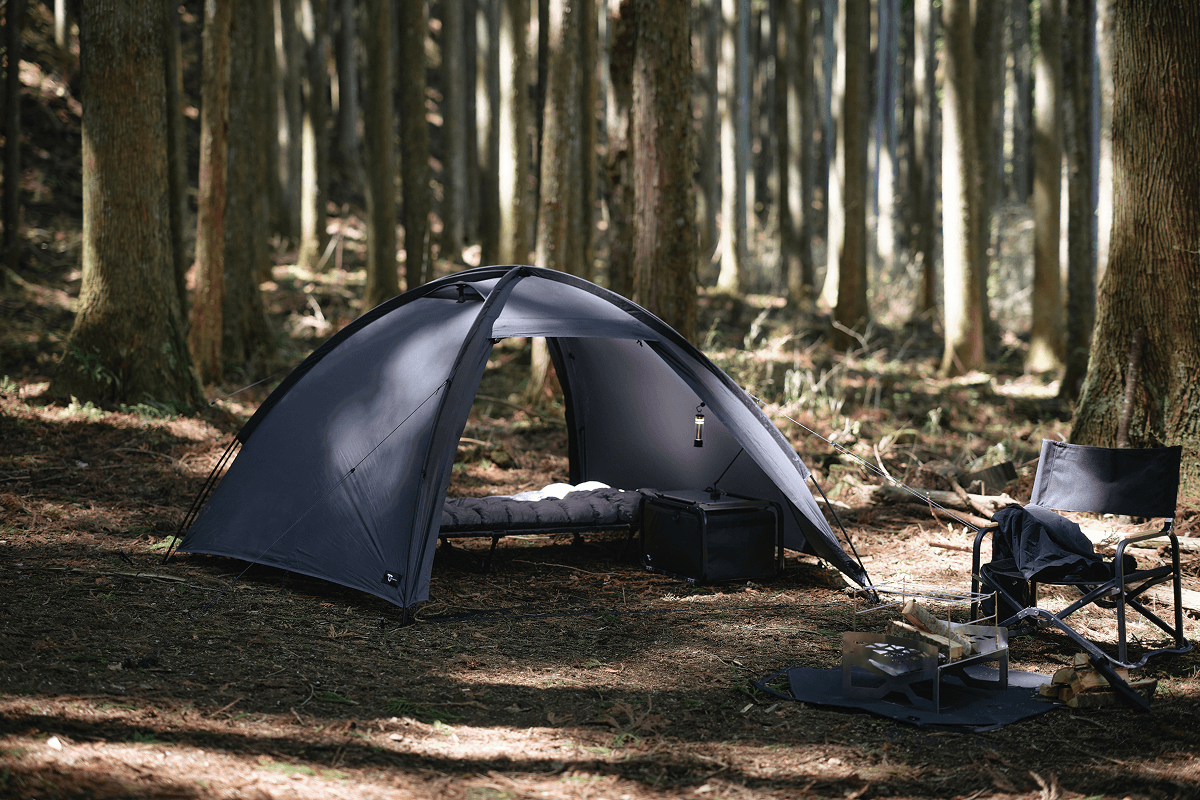
The Night Rover 2P is a compact dome tent that balances comfort and portability. It’s the perfect size for two people, and offers a luxurious camping experience for solo travelers.
An inner tent is included as standard, and with two entrances—one at the front and one at the back—it’s designed for easy access.
With a maximum interior height of 110 cm, it feels spacious and airy, and features a wide opening with a maximum width of 180 cm. Setup is quick and stress-free thanks to its three-pole cross-frame structure. The inner tent and optional groundsheet only need to be set up once; after that, they can be stored while still attached.
The Night Rover 2P has been tested at a domestic testing facility and has passed wind resistance tests for maximum wind speeds of 25 m/s.
Habisol Duo Tent
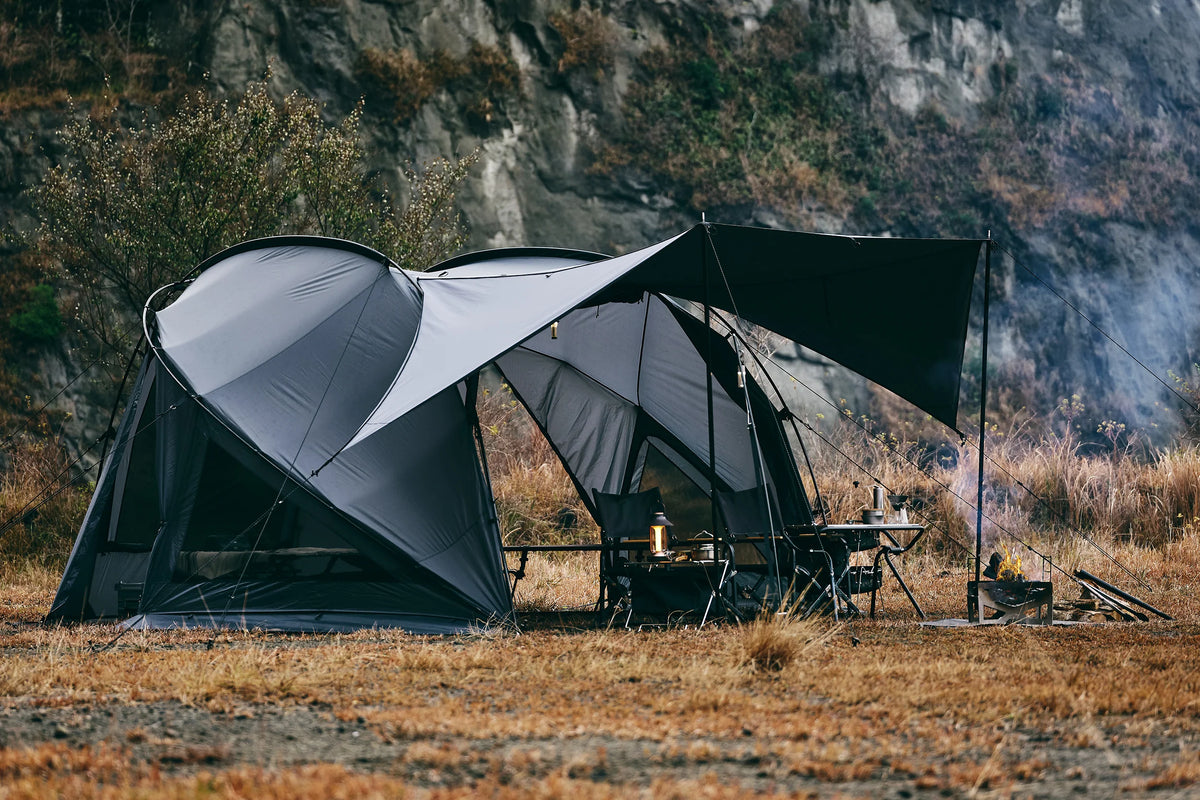
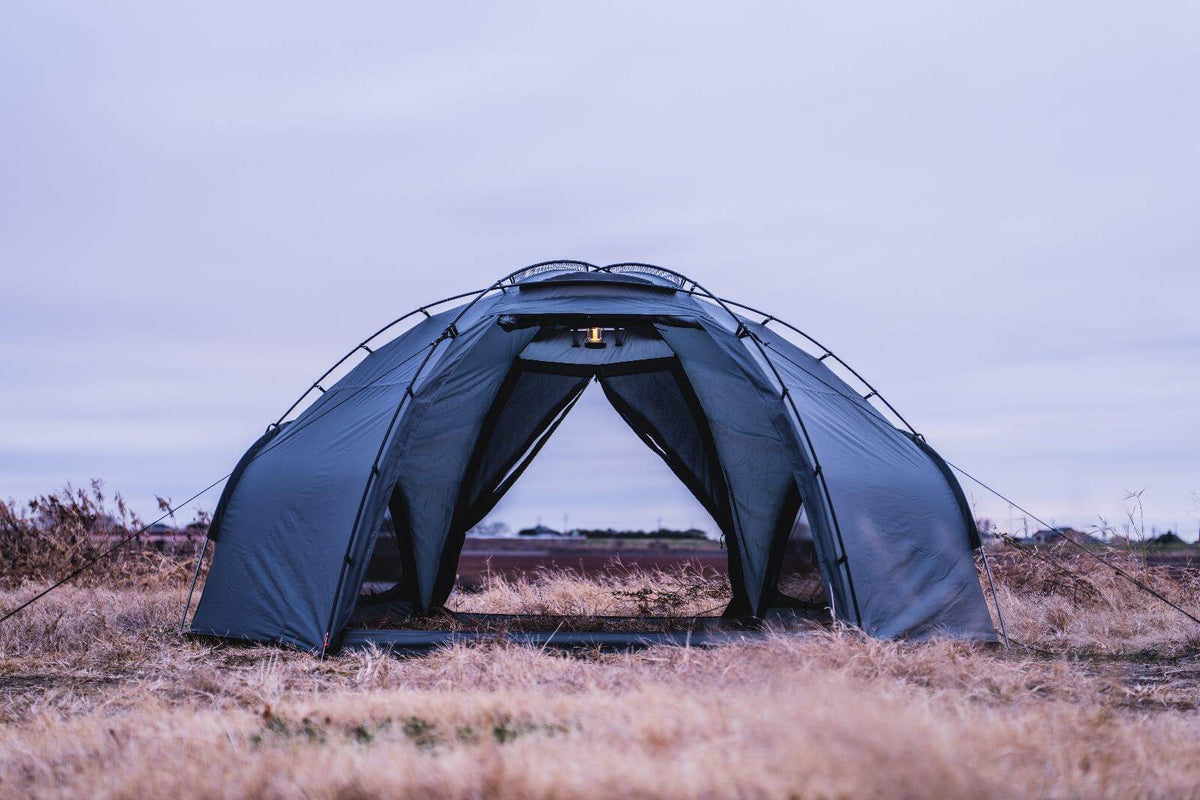
The Habisol is a dome-shaped shelter designed for two people to enjoy the outdoors in comfort.
With a spacious design featuring a maximum width of 4.1 m and a ceiling height of 1.95 m, it incorporates mesh panels at five locations: the front, rear, both sides, and the skylight. Another appealing feature is that, in addition to the standard outer skirt, it is equipped with an inner skirt, which helps reduce the intrusion of cold air, drafts, and insects.
Like the Night Rover, the Habisol has undergone wind speed testing at a domestic testing facility and has passed the test for maximum wind speeds of 25 m/s.
Using the inner tent, living sheet, and TPU window together allows you to enjoy camping even more comfortably.
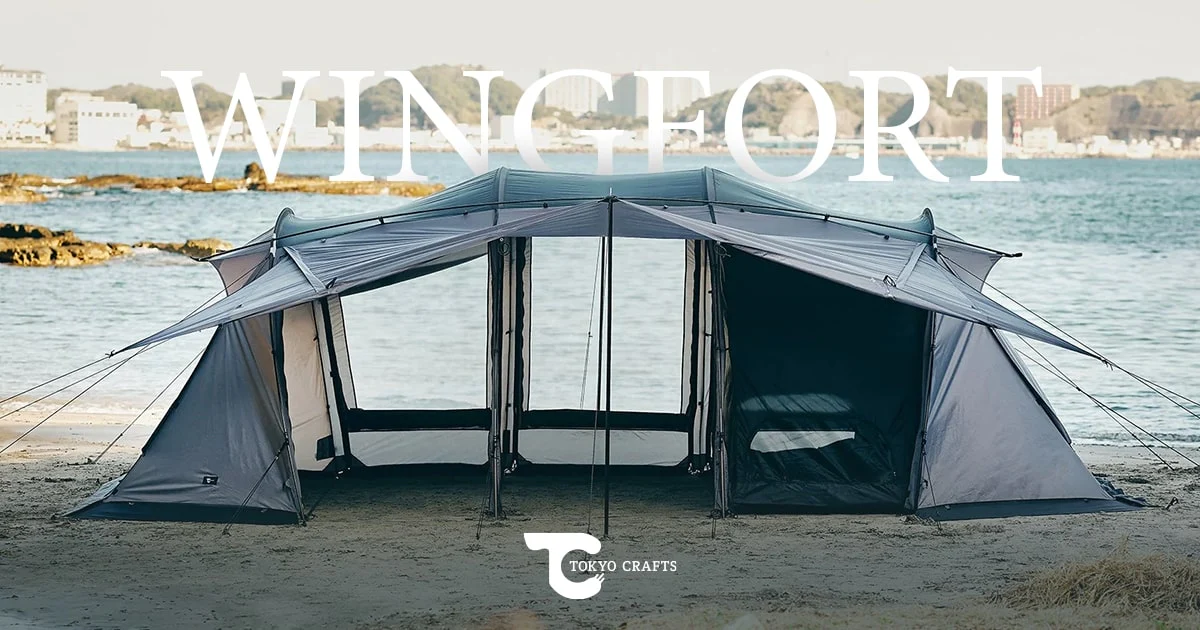
Wing Fort
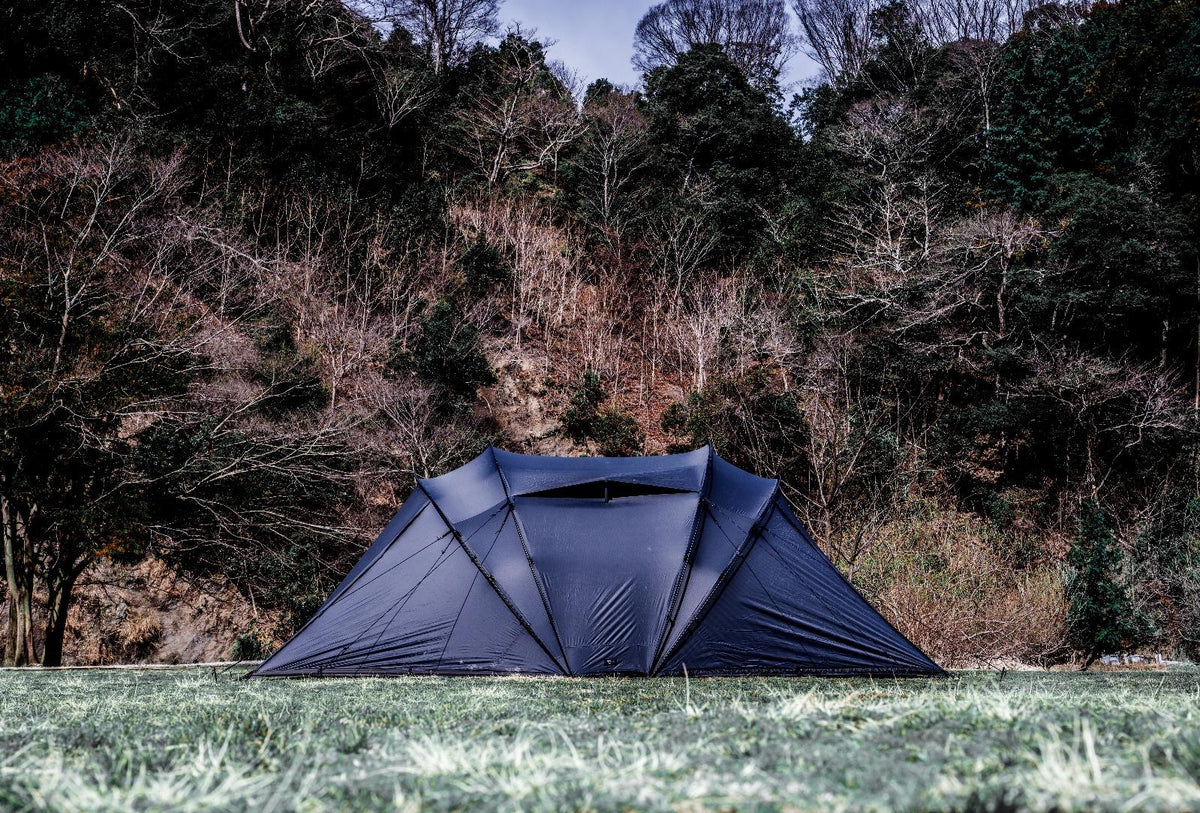
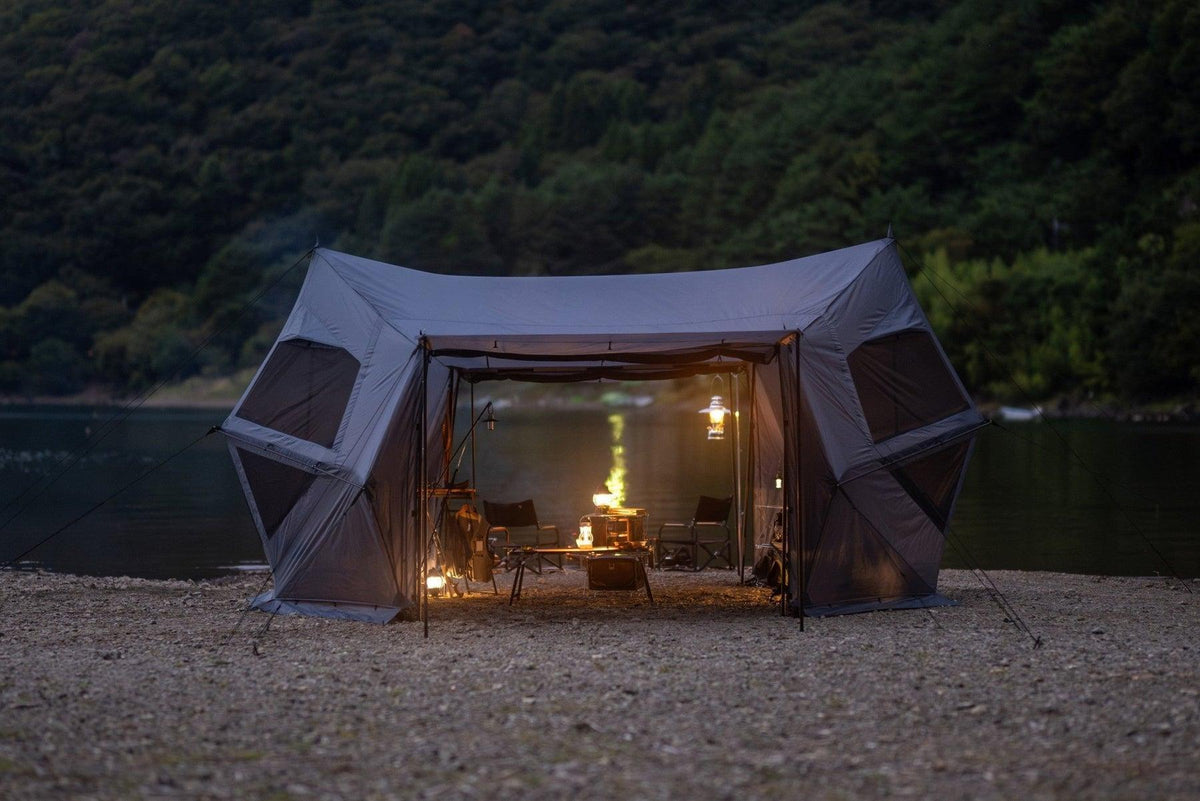
The Wing Fort is an all-around shelter that can flexibly adapt to any changes in season, weather, or location.
It features a unique double-layer structure that allows you to switch the interior between fully closed, fully open, and mesh modes while keeping the fully waterproof panels raised, enabling you to respond immediately to sudden changes in weather.
Its appeal lies in its unclaustrophobic ceiling height and spacious living area, and because it features a roll-up skirt, it is a tent suitable for use in all seasons.
It has passed wind resistance tests at a domestic testing facility, withstanding maximum wind speeds of 20 m/s when the panels are raised and 25 m/s when closed.
Please consider pairing it with TPU windows, a living room sheet, a groundsheet, and a floor mat.
Take precautions against the wind and enjoy a safe and secure camping experience!
The best choice for a wind-resistant tent varies depending on your camping style and the number of people. For solo or two-person use, we recommend a dome-style tent; for families or larger tents, prioritize structure and setup method; and for mountaineering, prioritize lightweight and wind resistance above all else.
Furthermore, a truly wind-resistant camping environment is achieved only by taking a comprehensive approach that includes not just the tent’s performance, but also how it’s pitched, wind direction, and the use of stakes and guy lines.
We hope this article helps you find the wind-resistant tent that’s right for you, so you can enjoy safe and comfortable outdoor adventures.
RANKING
ランキング一覧へ
ポイント10%ポイント15% ポイント10%ポイント15%
 ポイント10%ポイント15%
 ポイント10%ポイント15%
 ポイント10%ポイント15%
 ポイント10%ポイント15%
ポイント10%ポイント15%
ポイント10%ポイント15%
 ポイント10%ポイント15%
 ポイント10%ポイント15%
ポイント10%ポイント15%
ポイント10%ポイント15% ポイント10%ポイント15%
ポイント10%ポイント15%
ポイント10%ポイント15% ポイント10%ポイント15%
 ポイント10%ポイント15%
 ポイント10%ポイント15%
ポイント10%ポイント15%
ポイント10%ポイント15%
ポイント10%ポイント15%
ポイント10%ポイント15%
ポイント10%ポイント15%
ポイント10%ポイント15%
ポイント10%ポイント15%
ポイント10%ポイント15%
ポイント10%ポイント15%
ポイント10%ポイント15% ポイント10%ポイント15%
ポイント10%ポイント15%
ポイント10%ポイント15%
ポイント10%ポイント15%
ポイント10%ポイント15%
ポイント10%ポイント15%
ポイント10%ポイント15%
ポイント10%ポイント15%
ポイント10%ポイント15%
ポイント10%ポイント15%
ポイント10%ポイント15%
 ポイント10%ポイント15%
 ポイント10%ポイント15%
ポイント10%ポイント15%
ポイント10%ポイント15% ポイント10%ポイント15%
 ポイント10%ポイント15%
 ポイント10%ポイント15%
ポイント10%ポイント15%
ポイント10%ポイント15% ポイント10%ポイント15%
 ポイント10%ポイント15%
 ポイント10%ポイント15%
 ポイント10%ポイント15%
 ポイント10%ポイント15%
 ポイント10%ポイント15%
 ポイント10%ポイント15%
SEE MORE (その他オススメ商品)
ポイント10%ポイント15% ポイント10%ポイント15%
 ポイント10%ポイント15%